Home   |   News   |   Discussion Forum   |   Books   |   Curiosity Shop
Discussion Forum
Science Talk
Discuss scientific conundrums with our motley band of bamboozled boffins.
Latest Posts
THE EGO: Its nature, function and...value?
by Tutor Turtle
01:09 AM
different ways of producing electricity
by Iztaci
03:55 PM
Why doesn't America believe in evolution?
by Revlgking
02:40 PM
Type I civilization: can we make it?
by Anonymous
12:02 PM
The heavy situation of Global Warming
by samwik
12:52 AM
Search
Custom Search
Sponsored Links
Most Read
Hormones gone wild
Homo superior
The universe as magic roundabout
In space, no one can hear you say "doh!"
Bow to your insect overlords!
Bionics
Sex and the schizoid factor
Delusions and mental illness
We come in peace – not!
Eeew!
Small penis syndrome a big problem?
Have you hugged your robot today?
Down on the farm - yields, nutrients and soil quality
Cat parasite has global ambitions
Pop goes the planet
The disappearing male
Missing link a tripping chimp?
Inorganic dust formations alive?
Science Shopping
Sci Shop
Peculiar scientific stuff that you didn't even know existed and you don't need.
News And Research

Physics

Climate Change

Space

Natural World

Health

Technology


All 2008 News

Rusty's Reading List
Sci Books
Join Rusty Rockets for the lowdown on what you should be reading.
Archives
2008 2007
2006 2005 2004
2003 2002 2001
2000 1999 1998
Discussion Archive
Feature Archive


10 June 2008
ADHD A Benefit In The Wild?
by Kate Melville

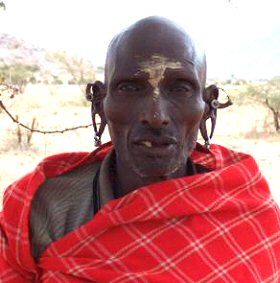
A fascinating new study in the journal BMC Evolutionary Biology suggests that attention deficit hyperactivity disorder (ADHD) might be beneficial to nomadic Kenyan tribesmen in Africa, while possibly leading to malnourishment in their settled cousins.

Led by Dan Eisenberg, an anthropologist from Northwestern University, the study looked at occurrences of the ADHD-associated version of the dopamine receptor D4 gene (DRD4) in Ariall tribesmen and then correlated body mass index and height with variants of the DRD4 gene. One version of the DRD4 gene, the "7R allele," is believed to be associated with food craving as well as ADHD. "This gene is likely to be involved in impulsivity, reward anticipation and addiction," explained Eisenberg.

By studying adult tribesmen, some of whom still live as nomads while others live in settlements, the research team probed whether this association would have the same implications in the different environments.

Intriguingly, while those with the DRD4/7R allele were better nourished in the nomadic population, they were less well-nourished in the settled population. Although the effects of different versions of dopamine genes have previously been studied in Western nations, very little research has been carried out in subsistence environments like the areas where the Ariaal live, despite the fact that such environments may be more comparable to the environments where much early human evolution took place.

"The DRD4/7R allele has been linked to greater food and drug cravings, novelty-seeking, and ADHD symptoms. It is possible that in the nomadic setting, a boy with this allele might be able to more effectively defend livestock against raiders or locate food and water sources, but that the same tendencies might not be as beneficial in settled pursuits such as focusing in school, farming or selling goods," speculated Eisenberg.

The findings suggest that behavioral differences previously associated with the DRD4 gene, such as ADHD, are more or less effective depending on the environment. Eisenberg is planning further research into how this might manifest in Ariaal children in the near future.

Related:
ADHD Drug Affects Developing Brain
More Evidence For Link Between Mood Disorders And Creativity
Food For Thought
Autism, Asperger's and Evolution
Brain Thrives On Constant, Chaotic Communication

Source: BMC Evolutionary Biology
Pic courtesy Jason Radak


Home            News            Discussion Forum            Books            Curiosity Shop            About

The terms and conditions governing your use of this website.
Copyright © 1997 - 2008 Science a Go Go and its licensors. All rights reserved.