Home   |   News    |   Discussions   |   Books   |   Curiosities
Search
Custom Search
Popular Reads

Earthquakes and animal behavior
LHC may produce time travelling particles
Country boys boast bigger junk
Running the numbers on alien life
Uh-oh, placebo
Forgetful? Blame your house
Pill to blame for rise in prostate cancer?
Cat parasite has global ambitions
Carbon monoxide keeps city dwellers happy
Magnetic field alters moral judgments
Stars manufacturing organic matter?
Unnatural selection: Courtesy of The Pill
Men 2% funnier than women
Parasite rewires sexual attraction
Novel psychiatric drugs take aim at gut bacteria
Discussions
General Science

Not-Quite Science

Physics

Climate Change

Science Fiction

Past Forums

Sponsored Links
Browse

Animal Kingdom

Biology

Climate Change

Environment

Evolution

Genetics

Humans

Mind & Brain

Prehistory

Health & Diet

Health Threats

Health & Environment

Health: From The Lab

Mental Health

Reproductive Health

Energy Alternatives

Chemistry

Computing & Electronics

Nanotechnology

Pimping Nature

Robotics & AI

Physics

Space


Curiosities
Sci Shop
Peculiar and bizarre scientific stuff that you didn't even know existed and you don't need.
Books
Book Reviews
Rusty Rockets lists his all-time favorite science titles.
Archives
2012 2011 2010
2009 2008 2007
2006 2005 2004
2003 2002 2001
2000 1999 1998
Feature Archive


1 January 2007
Antiquarian Herbal Book Yields Potential New Drugs
by Kate Melville

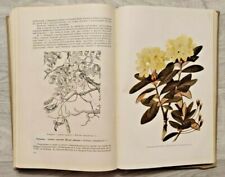
An unusual collaboration between Mayo Clinic researchers and a shamanistic healer from the Pacific nation of Samoa has yielded up a potential new treatment for the bacteria that can cause diarrhea. The researchers were first made aware of the possible therapeutic applications of the South Sea plant extract after applying modern data-mining techniques to the book Ambonese Herbal, written by the naturalist Georg Eberhard Rumpf in 1650.

Writing in The British Medical Journal, the researchers claim that their discovery validates the feasibility of using data mining techniques on historical texts to identify new drugs. "Natural products are invaluable sources of healing agents - consider, for example, that aspirin derived originally from willow bark, and the molecular basis of the anti-cancer chemotherapeutic agent TaxolTM was derived from the bark of the Pacific yew tree. So it's not so far-fetched to think that the contributions of an ancient text and insights from traditional medicine really may impact modern public health," explains Brent Bauer, of the Mayo Clinic Complementary and Integrative Medicine Program.

The antiquarian book is an account of the herbal healing traditions on the Indonesian island of Ambon. Rumphius' description of Atun kernels' therapeutic properties is what modern medicine calls "antimotility agents," they stop diarrhea. Writes Rumphius; "these same kernels... will halt all kinds of diarrhea, but very suddenly, forcefully and powerfully, so that one should use them with care in dysentery cases, because that illness or affliction should not be halted too quickly; and some considered this medicament a great secret, and relied on it completely."

The unusual research team who worked on the discovery included a shamanistic healer from the Independent State of Samoa, ethnobotanists from Hawaii who validated the correct botanical specimens, a New York botanist who reconciled ancient plant names with modern plant names and database experts from Chicago.

"For thousands of years, people around the world have lived intimately with botanical healing agents and evolved effective healing traditions. Our work shows just how much we can learn from them. But to make the most of what is fast becoming lost knowledge, we have to respect, preserve and work with traditional healing cultures," concluded co-researcher Eric Buenz.
Source: Mayo Clinic


Social

Follow Science a GoGo


Home         All The News      Science Forum         Books, Books, Books         Curiosity Shop         About

The terms and conditions governing your use of this website.
Copyright © 1997 - 2012 Science a Go Go and its licensors. All rights reserved.