You are here: Home › News › Stirling Engine Gets Noisy Makeover Stirling Engine Gets Noisy Makeover
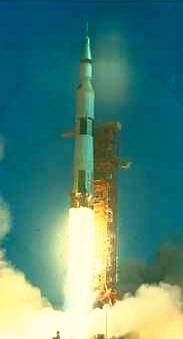
Scientists from the University of California and Northrop Grumman Space Technology have developed a novel method for generating electrical power for deep-space travel using sound waves. The research, appearing in the journal Applied Physics Letters, suggests that the traveling-wave thermoacoustic electric generator could be used to power spacecraft venturing into the furthest reaches of the Universe.
Scientist Scott Backhaus and his Northrop Grumman colleagues, Emanuel Tward and Mike Petach say the traveling-wave engine/linear alternator system is similar to the current thermoelectric generators in that it uses heat from the decay of a radioactive fuel to generate electricity, but is more than twice as efficient. The new design is an improvement over current thermoelectric devices used for the generation of electricity aboard spacecraft. Such devices convert only 7 percent of the heat source energy into electricity. The traveling-wave engine converts 18 percent of the heat source energy into electricity.
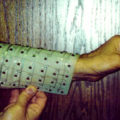
The traveling-wave engine is a modern-day adaptation of the 19th century invention of Robert Stirling – the Stirling engine – which is similar to a steam engine, but uses heated air instead of steam to drive a piston. The traveling-wave engine works by sending helium gas through a stack of 322 stainless-steel wire-mesh discs called a regenerator. The regenerator is connected to a heat source and a heat sink that causes the helium to expand and contract. This expansion and contraction creates powerful sound waves – in much the same way that lightning causes the thermal expansion that produces thunder. These oscillating sound waves in the traveling-wave engine drive the piston of a linear alternator that generates electricity. Since the only moving component in the device besides the helium gas itself is an ambient temperature piston, the device possesses the kind of high-reliability required of deep space probes.


A Vintage Handkerchief Makeover by Elizabeth Kurella
$15.00
Avon Maria Makeover Bottle- 1982
$3.50
1999 Dart Sabrina the Teenage Witch Marvelous Makeover #57 sc7
$3.99
member of Smoky Mountain Hotel Association metal tin sign garage makeover
$18.94

Big makeover playing cards Mickey Mouse
$32.52
1970 Grace Slick Rolling Stone metal tin sign garage makeover restaurant pub
$18.95
Disney Pirate Princess Makeover Lot Of Accessories
$15.00
The Quintessential Quintuplets Exhibition Makeover Music Box
$150.68
Clothique Possible Dreams Santa 71189 Extreme Makeover Toyshop Edition Rare
$69.99
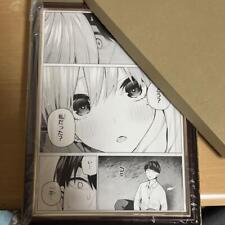
The Quintessential Quintuplets Exhibition Makeover Reproduces Original Painting
$222.99



Comments are closed.