
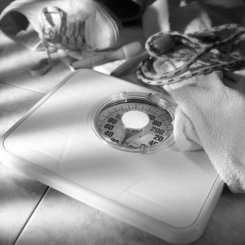
An appetite control agent that requires no prescription, has no side-effects and costs almost nothing? A new clinical trial has confirmed that just two 8-ounce glasses of the stuff, taken before meals, enables people to shed pounds. The new miracle elixir? Water.
The Virginia Tech findings, presented at the 240th National Meeting of the American Chemical Society, come from the first randomized controlled intervention trial demonstrating that increased water consumption is an effective weight loss strategy.
“We found in earlier studies that middle aged and older people who drank two cups of water right before eating a meal ate between 75 and 90 fewer calories during that meal. In this recent study, we found that over the course of 12 weeks, dieters who drank water before meals, three times per day, lost about 5 pounds more than dieters who did not increase their water intake,” said Brenda Davy, senior author on the study. “People should drink more water and less sugary, high-calorie drinks. It’s a simple way to facilitate weight management.”
Previous studies had hinted that drinking water before meals reduces intake of calories but there has been surprisingly little scientific information on the topic. The study included 48 adults aged 55-75 years, divided into two groups. One group drank 2 cups of water prior to their meals and the other did not. All of the subjects ate a low-calorie diet during the study. Over the course of 12 weeks, water drinkers lost about 15.5 pounds, while the non-water drinkers lost about 11 pounds.
Davy also pointed out that that nobody knows exactly how much water people should drink daily. The Institute of Medicine says that most healthy people can simply let thirst be their guide. It does not specify exact requirements for water, but set general recommendations for women at about 9 cups of fluids – from all beverages including water – each day, and men at about 13 cups of fluids.
Related:
Water Intake Guidelines Questioned
Recommended Water Intake A Myth
Brain Has Sixth Sense For Calories













Comments are closed.