Home   |   News    |   Discussions   |   Books   |   Curiosities
Search
Custom Search
Popular Reads

Earthquakes and animal behavior
LHC may produce time travelling particles
Country boys boast bigger junk
Running the numbers on alien life
Uh-oh, placebo
Forgetful? Blame your house
Pill to blame for rise in prostate cancer?
Cat parasite has global ambitions
Carbon monoxide keeps city dwellers happy
Magnetic field alters moral judgments
Stars manufacturing organic matter?
Unnatural selection: Courtesy of The Pill
Men 2% funnier than women
Parasite rewires sexual attraction
Novel psychiatric drugs take aim at gut bacteria
Discussions
General Science

Not-Quite Science

Physics

Climate Change

Science Fiction

Past Forums

Sponsored Links
Browse

Animal Kingdom

Biology

Climate Change

Environment

Evolution

Genetics

Humans

Mind & Brain

Prehistory

Health & Diet

Health Threats

Health & Environment

Health: From The Lab

Mental Health

Reproductive Health

Energy Alternatives

Chemistry

Computing & Electronics

Nanotechnology

Pimping Nature

Robotics & AI

Physics

Space


Curiosities
Sci Shop
Peculiar and bizarre scientific stuff that you didn't even know existed and you don't need.
Books
Book Reviews
Rusty Rockets lists his all-time favorite science titles.
Archives
2012 2011 2010
2009 2008 2007
2006 2005 2004
2003 2002 2001
2000 1999 1998
Feature Archive


10 September 2009
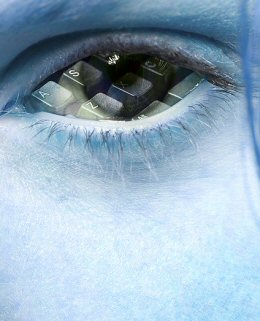
Mind-reading through the eyes
by Kate Melville

Scientists say they may be able to glean information about stored memories and past events by tracking a subject's eye movements, even when the subject is unable - or unwilling - to describe what they remember. The research, appearing in the journal Neuron, shows the relationship between activity in the hippocampus, eye movements, and both conscious and unconscious memory.

The hippocampus is a brain region that is critical for conscious recollection of past events, but the precise role of this area in memory remains controversial. According to one theory, even if explicit memory retrieval fails, the hippocampus might still support expressions of relational memory (e.g., memory for the co-occurrence of items in the context of some scene or event).

To test this theory, Drs. Deborah Hannula and Charan Ranganath, both from the Center for Neuroscience at the University of California, Davis, used fRMI to examine participants' brain activity while they attempted to remember previously studied face-scene pairings. During scanning, participants were shown a previously studied scene along with three previously studied faces and were asked to identify the face that had been paired with that scene earlier. Eye movements were also monitored during the task and provided an indirect measure of memory.

During each test, participants frequently spent more time viewing the face that had been previously paired with the scene - an eye-movement-based memory effect. What is more surprising is that hippocampal activity was closely tied to the participants' tendency to view the associated face, even when they failed to identify it. Activity in the prefrontal cortex, an area required for decision making, was sensitive to whether or not participants had responded correctly and communication between the prefrontal cortex and the hippocampus was increased during correct, but not incorrect, trials.

The findings suggest that even when people fail to recollect a past event, the hippocampus might still support an expression of memory through eye movements. Furthermore, the results suggest that even when the hippocampus is doing its job, conscious memory may depend on interactions between the hippocampus and the prefrontal cortex.

The researchers posit that it may be possible to track memory in otherwise uncooperative individuals. "It is conceivable that eye-tracking could be used to obtain information about past events from participants who are unaware or attempting to withhold information," offers Dr. Hannula. "In other words, there may be circumstances in which eye movements provide a more robust account of past events or experiences than behavioral reports alone."

Related:
Those blinded by brain injury may still "see"
Selective memory erasure achieved
Liar, Liar, Your Prefrontal Cortex Is On Fire
Source: Neuron


Social

Follow Science a GoGo


Home         All The News      Science Forum         Books, Books, Books         Curiosity Shop         About

The terms and conditions governing your use of this website.
Copyright © 1997 - 2012 Science a Go Go and its licensors. All rights reserved.