Home   |   News    |   Discussions   |   Books   |   Curiosities
Search
Custom Search
Popular Reads

Earthquakes and animal behavior
LHC may produce time travelling particles
Country boys boast bigger junk
Running the numbers on alien life
Uh-oh, placebo
Forgetful? Blame your house
Pill to blame for rise in prostate cancer?
Cat parasite has global ambitions
Carbon monoxide keeps city dwellers happy
Magnetic field alters moral judgments
Stars manufacturing organic matter?
Unnatural selection: Courtesy of The Pill
Men 2% funnier than women
Parasite rewires sexual attraction
Novel psychiatric drugs take aim at gut bacteria
Discussions
General Science

Not-Quite Science

Physics

Climate Change

Science Fiction

Past Forums

Sponsored Links
Browse

Animal Kingdom

Biology

Climate Change

Environment

Evolution

Genetics

Humans

Mind & Brain

Prehistory

Health & Diet

Health Threats

Health & Environment

Health: From The Lab

Mental Health

Reproductive Health

Energy Alternatives

Chemistry

Computing & Electronics

Nanotechnology

Pimping Nature

Robotics & AI

Physics

Space


Curiosities
Sci Shop
Peculiar and bizarre scientific stuff that you didn't even know existed and you don't need.
Books
Book Reviews
Rusty Rockets lists his all-time favorite science titles.
Archives
2012 2011 2010
2009 2008 2007
2006 2005 2004
2003 2002 2001
2000 1999 1998
Feature Archive


13 August 2009
Herbals ineffective in treating menopausal symptoms
by Kate Melville

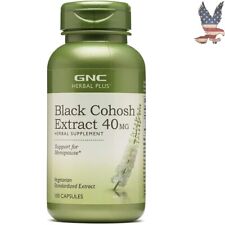
Studies conducted by researchers at the University of Illinois at Chicago (UIC) and Northwestern University have shown that the commonly used botanicals black cohosh and red clover do not have any significant effect on hot flashes or cognitive function in menopausal women. Interestingly, the researchers found that the study participants who were assigned the placebo experienced a greater reduction in hot flashes than those women who were taking the botanicals.

The researchers found that the average number of hot flashes per week decreased over time across all groups - black cohosh decreased 34 percent, red clover 57 percent, placebo 63 percent and hormone therapy 94 percent.

"The important message is that all women improved, but there was a large placebo effect, and the botanicals did not work significantly better than placebo," said UIC's Stacie Geller, the author of the study. "As expected, hormone therapy, considered the gold standard, significantly reduced hot flashes when compared with placebo."

Geller also reported no significant differences between botanical treatments and placebo for any of the safety parameters, including breast and endometrial safety, liver enzymes, complete blood count, or lipid profiles.

In the second study, UIC and Northwestern researchers sought to determine whether the botanic treatments had an effect on cognitive abilities, particularly verbal memory. The study, like the main trial, found that none of the botanicals had either a beneficial or a detrimental effect on memory. Interestingly, the specific hormone therapy used in the trial, Prempro, had a slight negative impact on memory.

"Together, these two studies demonstrate that compared to botanicals, only hormone therapy had a beneficial effect on vasomotor symptoms, but this benefit was at the cost of a slight decrease in memory," concluded UIC's Pauline Maki, the lead author of the cognition study.

Related:
Meta-review slams herbal remedies for menopausal women
Menopause Exclusively Human
Source: University of Illinois at Chicago


Social

Follow Science a GoGo


Home         All The News      Science Forum         Books, Books, Books         Curiosity Shop         About

The terms and conditions governing your use of this website.
Copyright © 1997 - 2012 Science a Go Go and its licensors. All rights reserved.