
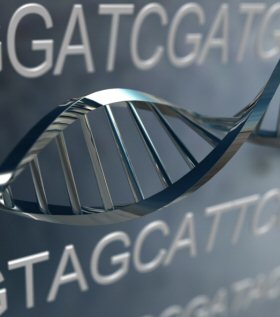
English scientists have discovered a unique DNA signature in human sperm which appears to act as a key that unlocks an egg’s fertility and triggers new life. Drs David Miller and David Iles from the University of Leeds, in collaboration with Dr Martin Brinkworth at the University of Bradford, have found that sperm writes a DNA signature that can only be recognized by an egg from the same species.
“What we have discovered is a previously unrecognized DNA packaging ‘signature’ in mammalian sperm that may be essential for successful fertilization of the egg and development of the embryo. We think it may also be ancient in origin,” Iles reported in the journal Genome Research.
Without the right “key,” successful fertilization either cannot occur, or if it does, development will not proceed normally. Notably, disturbances in human sperm DNA packaging are known to cause male infertility and pregnancy failures. This lock and key mechanism has other profound implications. Not only does it explain why some otherwise healthy men produce sperm that is sterile, but it also explains how different species evolve and retain their own identity.
“There is a definite pattern to the way DNA is packaged in sperm cells and we can see that this pattern is the same in unrelated fertile men. It is different in the sperm of infertile men. This implies that there is a significance to the packaging of DNA that has a direct relevance to male fertility,” explained Iles.
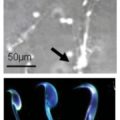
Detailed analyses of the DNA in the “open,” less tightly packaged conformation, showed this DNA carries much of the information critical for activating genes essential for directing the development of the embryo. Further investigations showed the same conformation to exist in the sperm of several unrelated human donors and remarkably, highly similar packaging patterns to exist in the sperm of mice.
DNA regions in the open conformation may therefore be more vulnerable to damaging toxins, such as those in cigarette smoke and certain anti-cancer drugs, than those that are tightly packaged.
The findings also help explain why inter-species breeding is so rarely successful. Where the locks and keys of two species do not match, however similar their DNA is, no viable offspring can be born. Occasionally, for example, with horses and donkeys, offspring are produced – but because the sperm and egg signatures are incompatible, their development as embryos is abnormal and any offspring are almost always infertile.
The researchers believe that the same mechanism must also have played a role during human evolution. In the ancient history of mankind, Neanderthals co-existed with modern humans over many thousands of years. Sexual encounters between these two closely related species cannot be ruled out, yet there is no evidence in our DNA of a legacy from such couplings. It is possible that if offspring were produced, they either did not survive long or if they did, they were unable to reproduce.
Related:
St Valentine’s Day Sperm Massacre
Researchers Investigate Giant Sperm Paradox
Brainier men have better sperm
New Molecular Insights Into Post-Coital “Ladies’ Choice”












Comments are closed.