
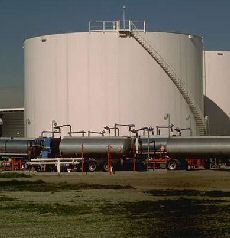
Corn is not a viable biofuel source, says a new report released today by Food & Water Watch, the Network for New Energy Choices, and the Vermont Law School Institute for Energy and the Environment. The report claims that the corn ethanol refinery industry will not significantly offset U.S. fossil fuel consumption without unacceptable environmental and economic consequences.
“Rural communities won’t benefit from the Farm Bill becoming a fuel bill. In the long run, family farmers and the environment will be losers, while agribusiness, whose political contributions are fueling the ethanol frenzy, will become the winners,” said Food & Water Watch’s Wenonah Hauter.
- Corn – now used to produce 95 percent of U.S. ethanol is the least sustainable biofuel feedstock of all raw materials commonly used.
- The capacity of corn ethanol to offset U.S. fossil fuel use is extremely limited. Dedicating the entire U.S. corn crop to ethanol production would only offset 15 percent of gasoline demand.
- Corn ethanol is the wrong biofuel for combating global warming. The most favorable estimates show that corn ethanol could reduce greenhouse gas emissions by 18 – 28 percent, while cellulosic ethanol is estimated to offer a reduction of 87 percent.
- While higher commodity prices and cooperatively owned ethanol refineries could be a boon to independent farmers, unregulated ethanol industry growth will further concentrate agribusiness, threatening the livelihood of rural communities.
“As long as we spend more on subsidizing energy suppliers than we do on investments in energy efficiency, we are on a path to pain. We are already subsidizing corn-ethanol with more money than we spend on high-mileage cars or on quality mass-transit,” said Michael Dworkin, of the Vermont Law School Institute for Energy and the Environment.
The group makes a number of policy recommendations relating to biofuels, including:
- Policies tied to a sustainable fuel standard that ensures best management practices of land, water, and soil use.
- Any ethanol funding in the U.S. Farm Bill should focus on research and development of cellulosic ethanol.
- No coal-fired ethanol refineries should be eligible for federal subsidies. Instead, small scale ethanol refineries should be encouraged to use lignin, a cellulosic byproduct, as fuel.
- Loan guarantees for refineries should be directed to locally owned facilities that benefit farmers and rural communities. The farm bill should include measures to ensure that subsidies are only provided to refinery operations that are farmer majority-owned.
Related articles:
Glucose Converted Directly To Faux Fossil Fuel
Ethanol Vehicles A Health Hazard
Study Slams Economics Of Ethanol And Biodiesel







Comments are closed.