
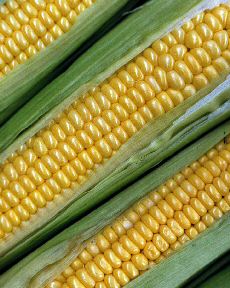
With controversy surrounding the economics of biofuel production and nagging doubts about its large-scale sustainability, researchers have now turned their attention to ways of producing biofuels more efficiently.
Looking at ethanol production, Purdue University researchers say they have discovered that particles from cornstalks undergo previously unknown structural changes when processed to produce ethanol. They found that pre-treating corn plant tissue with hot water – an established practice that increases ethanol yields 3 to 4 times – in fact works by exposing minute pores of the plant’s cell walls, thus increasing surface area for additional reactions that help break down the cell wall.
The discovery, made using high-resolution imaging and chemical analyses, applies to cellulosic ethanol (ethanol produced from cellulose). Cellulose is a key component of plant’s cell walls, but it is not easily freed from the cell wall’s complex, rigid structure, and, to date, cellulosic ethanol has not been commercially viable. This research, reported in Biotechnology and Bioengineering may change that, as previously overlooked and discounted biomass sources become viable.
But breaking down the cells is only the first part of the process. The sugars that are released then need to be fermented. Typically, this has been achieved by using microbial enzymes called “cellulases,” but the process is relatively inefficient. Now, a team at Cornell University say they have discovered a new class of plant enzymes that could potentially increase efficiency dramatically.
“The bottleneck for conversion of lignocellulose into ethanol is efficient cellulose degradation,” said Cornell’s Jocelyn Rose. “The discovery of these enzymes suggests there might be sets of new plant enzymes to improve the efficiency of cellulose degradation.”
Detailing the work in the Journal of Biological Chemistry, Rose explained that for an enzyme to break down cellulose, a structure called a cellulose-binding module attaches to the cellulose. Once attached, a catalyst then breaks the polymer into small units, which can then be turned into ethanol. While researchers have known that plants have cellulase-like enzymes, it was previously thought that they did not have a cellulose-binding module, and so could not attach to cellulose or digest it very effectively – until now.
“This is the first example of a cellulose-binding domain in a plant cell wall enzyme,” said Rose. While the new enzyme was found in a tomato plant, Rose and colleagues have evidence of a set of such plant proteins in many species that potentially could be used for biofuel production. Biofuel research may also help uncover exciting new uses for these enzymes, said Rose.
Related articles:
Laughing Gas Levels From Biodiesel Crops Not Funny
Ethanol Vehicles A Health Hazard
Study Slams Economics Of Ethanol And Biodiesel















Comments are closed.