

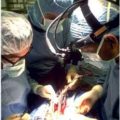
A surprising survey of 700 surgeons in the US found that more than half failed to report needle-stick injuries when they occurred. Astonishingly, the survey revealed that 99 percent of surgeons-in-training suffered an average of eight needle-stick injuries in their first five years. Worse, of those who reported the injury, 53 percent involved a patient with a history of intravenous drug use and/or infected with HIV, hepatitis B or hepatitis C.
Reporting in The New England Journal of Medicine, the researchers said that surgeons cited “pointlessness” and that “reporting took too much time” as the main reasons behind their casual attitude to bloodborne infections.
The researchers suggest that injuries could be greatly reduced by hospitals increasing the use of nurse practitioners and physicians’ assistants to reduce surgical workloads and adopting non-sharp surgical techniques such as electric scalpels, clips and glues. “Twenty percent of all general surgery operations could be done without using any sharp instruments,” said co-researcher Martin Makary.
Makary also advocates timely reporting mechanisms such as internal hotlines, routine prompts (e.g., postoperative checklists), and peer-to-peer education to create a local culture that encourages speaking up. “We know also that many residents resist reporting because the training culture suggests that needle sticks ‘go with the territory’ and reporting them may lower peer esteem,” he said.
“Being rushed” and “no utility in reporting” were reasons cited by the surgeons, but the researchers contend that early reporting and treatment with antivirals can prevent the establishment of infection in people exposed to HIV and HBV and can eradicate evidence of the virus in more than 90 percent of people with acute HCV infection.
Related articles:
The Ten Scariest Medical Mishaps













Comments are closed.