
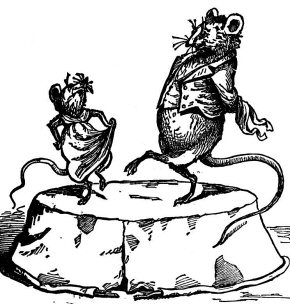
Epigenetic changes (inherited changes in gene regulation that occur without a change in DNA sequence) caused by a common fruit fungicide (Vinclozolin) are dramatically affecting the mating behavior of rats, say researchers from the University of Texas at Austin. They found that female rats avoid males whose great-grandfathers were exposed to the fungicide, preferring instead males whose ancestors were uncontaminated.
Importantly, the researchers have shown that inherited epigenetic change can affect behavior and that environmental contamination could affect the evolution of wildlife through changes in mating behavior.
The researchers, David Crews and Andrea Gore, examined mate preference in male and female rats whose great-grandparents were exposed to vinclozolin, which causes the early onset of cancer and kidney disease in males. They found that female rats could identify the male descendants of rats that had been exposed to vinclozolin. The females strongly preferred to associate with males who were descended from unexposed rats.
“Even across generations, your attractiveness as a mate is decreased if your great-grandfather has been exposed to environmental chemicals,” said Gore. “The female rats can sense something is wrong, although they can’t see it. That will have an impact on your ability to reproduce and could take you out of the gene pool.”
“The important thing about this research is that it takes epigenetics to the brain,” added Crews. “The female is able to detect which male is likely to get early onset disease and which male is not before they show any manifestation of disease. That has consequences for evolution, because it shows that females are selecting males on the basis of an epigenetic imprint as opposed to genetic changes.”
Related articles:
Inherited Disease Findings Stir Evolutionary Debate
Switching Genes On And Off To Cure Disease
Waterways Awash With Anti-Bacterial Chemical
Environmental Factors Damaging Men’s Reproductive Health
Source: University of Texas at Austin
Related posts:
 Poor diet shown to have dramatic effects on sperm and future health of offspring
 Novel epigenetic messaging system found in sperm
 Epigenetics might explain evolutionary puzzle of homosexuality
 Antibiotics found to have transgenerational effects
 New nucleotide could revolutionize field of epigenetics
 Newly discovered non-coding genes control critical disease processes

Comments are closed.