Home   |   Sci News   |   Discussion Forum   |   Books, Books, Books   |   Curiosity Shop
Discussion Forum
Science Talk
Discuss scientific conundrums with our band of bamboozled boffins.
Search
Custom Search
Sponsored Links
Science Shopping
Sci Shop
Peculiar and bizarre scientific stuff that you didn't even know existed and you don't need.
News And Research

Animal Kingdom

Biology

Climate Change

Environment

Evolution

Genetics

Humans

Mind & Brain

Prehistory

Health & Diet

Health Threats

Health & Environment

Health: From The Lab

Mental Health

Reproductive Health

Energy Alternatives

Chemistry

Computing & Electronics

Nanotechnology

Pimping Nature

Robotics & AI

Physics

Space


Science Books
Book Reviews
Rusty Rockets lists his all-time favorite science titles.
Archives
2009 2008 2007
2006 2005 2004
2003 2002 2001
2000 1999 1998
Discussion Archive
Feature Archive


3 April 2007
Dung Critter Lifts Mood
by Kate Melville

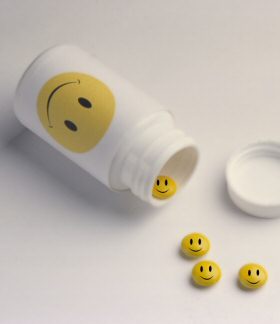
Scientists from the University of Bristol and University College London have found that treating mice with soil bacteria altered their behavior in a way similar to that produced by antidepressant drugs. The findings, reported in Neuroscience, indicate that the dung-loving bacterium Mycobacterium vaccae activated a group of neurons in the brain that produce serotonin.

It has long been suspected that the immune system plays in role in depression, but the mechanics of the relationship have not been well understood. "These studies help us understand how the body communicates with the brain and why a healthy immune system is important for maintaining mental health. They also leave us wondering if we shouldn't all be spending more time playing in the dirt," said lead author Dr Chris Lowry, from Bristol University.

The study took place after human cancer patients being treated with M. vaccae unexpectedly reported increases in their quality of life. Lowry and his colleagues reasoned that this effect could be caused by activation of the neurons in the brain that secrete serotonin - a chemical that when lacking is thought to cause depression in people.

Looking closely at the brains of mice after treatment with M. vaccae, the researchers found that the bacterium did indeed activate neurons associated with the production of serotonin. The researchers speculate that M. vaccae's effects on the behavior of mice may be due to increasing the release of serotonin in the parts of the brain that regulate mood. Lowry said that future studies will look more closely at the antidepressant effects of M. vaccae and other bacteria.

More brain bending little critters:
Cat Parasite Aiming For Global Male Domination
Boffin Ponders Cultural Manipulation By Cat Parasite

Source: University of Bristol


Home         All The News      Science Forum         Books, Books, Books         Curiosity Shop         About

The terms and conditions governing your use of this website.
Copyright © 1997 - 2009 Science a Go Go and its licensors. All rights reserved.