
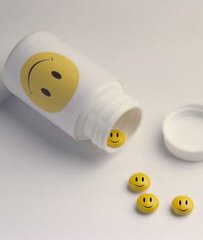
A Canadian study has linked the diagnosis of cataracts with the class of antidepressants known as selective serotonin reuptake inhibitors (SSRIs), as well as between cataracts and specific drugs within that class.
The researchers, from the University of British Columbia, Vancouver Coastal Health Research Institute and McGill University, based their study on more than 200,000 Quebec residents aged 65 and older. Published in the journal Ophthalmology, the study does not prove causation but does reveal an association between the use of SSRIs and the development of cataracts. This study is the first to establish a link between this class of drugs and cataracts in humans.
Interestingly, the degree of risk among specific and different types of SSRIs varied considerably. Taking fluvoxamine (Luvox) led to a 51 percent higher chance of having cataract surgery, and venlafaxine (Effexor) carried a 34 percent higher risk. No connection could be made between fluoxetine (Prozac), citalopram (Celexa), and sertraline (Zoloft) and having cataract surgery.
The study notes that while the results are surprising, and might inform the choices of psychiatrists when prescribing SSRIs for patients, the findings should not be cause for alarm among people taking these medications.
Related:
Do antidepressant meds work through personality change?
Inventing Illness
Going ‘Postal’ On Placebos
Source: University of British Columbia
Related posts:
 Link between serotonin and depression is a myth, argues leading psychiatrist
 Psychiatrists put themselves on the couch
 Antidepressants in water induce autism-like gene expression in fish
 Antidepressant use primes brain for placebo effect
 Compelling evidence for autism-antidepressant link
 New target for antidepressants



Comments are closed.