Home   |   Sci News   |   Discussion Forum   |   Books, Books, Books   |   Curiosity Shop
Discussion Forums
General Science

Not-Quite Science

Physics

Climate Change

Science Fiction

Past Forums

Search
Custom Search
Sponsored Links
News And Research

Animal Kingdom

Biology

Climate Change

Environment

Evolution

Genetics

Humans

Mind & Brain

Prehistory

Health & Diet

Health Threats

Health & Environment

Health: From The Lab

Mental Health

Reproductive Health

Energy Alternatives

Chemistry

Computing & Electronics

Nanotechnology

Pimping Nature

Robotics & AI

Physics

Space


Science Shopping
Sci Shop
Peculiar and bizarre scientific stuff that you didn't even know existed and you don't need.
Science Books
Book Reviews
Rusty Rockets lists his all-time favorite science titles.
Archives
2010
2009 2008 2007
2006 2005 2004
2003 2002 2001
2000 1999 1998
Feature Archive

Bookmark and Share


15 February 2007
Honeybees Hit The Road
by Kate Melville

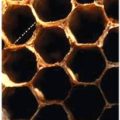
A mysterious ailment called Colony Collapse Disorder (CCD) is causing agricultural honeybees around the country to abandon their hives and disappear. Now, University of Montana (UM) honeybee researchers have been enlisted to look into the phenomenon in the hope of uncovering what's bugging the bees. "Individual beekeepers are really taking a beating," UM entomologist Jerry Bromenshenk said. "A guy down in Oklahoma lost 80 percent of his 13,000 colonies in the last month. In Florida, there are a whole lot of people facing 40, 60 and 80 percent losses. That's huge."

CCD causes adult honeybees to abandon a hive and disappear, leaving the queen and a remnant of younger bees. The malady also results in young bees not being protected by their older siblings - likely because most of the adult bees have left. Where the bees go is a mystery.

"We don't want to panic the beekeeper industry because we are not sure it's time to push the panic button yet," Bromenshenk said. "But we do know this is real, it's severe and it's widespread." Similar outbreaks have been documented in beekeeping literature as far back as 1896, and the last major occurrence was likely in the 1960s. "My belief is that what's going on right now has been seen before, but we've never really gotten a handle on it. Our group is trying to bring some fact-finding into play on this whole issue. We have some new technologies available now that weren't available in the 60s," he added.

Bromenshenk said at least 22 states have been affected by CCD during the latest outbreak. Theories about what causes the malady range from a rouge protozoan to new chemicals or a soil fungus, but no one knows for sure.
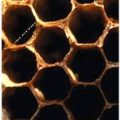
Source: University of Montana


Discuss this article in our forum

Home         All The News      Science Forum         Books, Books, Books         Curiosity Shop         About

The terms and conditions governing your use of this website.
Copyright © 1997 - 2010 Science a Go Go and its licensors. All rights reserved.