
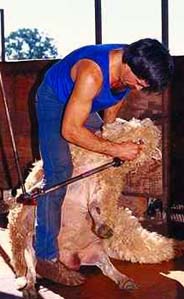
Researchers in the Oregon Health & Science University (OHSU) School of Medicine have confirmed that a male sheep’s preference for same-sex partners has biological underpinnings.
A study published in the journal Endocrinology demonstrates that not only are certain groups of cells different between genders in a part of the sheep brain controlling sexual behavior, but brain anatomy and hormone production may determine whether adult rams prefer other rams over ewes.
“This particular study, along with others, strongly suggests that sexual preference is biologically determined in animals, and possibly in humans,” said the lead author, Charles E. Roselli, professor in the Department of Physiology and Pharmacology. “The hope is that the study of these brain differences will provide clues to the processes involved in the development and regulation of heterosexual, as well as homosexual, behavior.”
“Same-sex attraction is widespread across many different species.” said Roselli, whose laboratory collaborated with the Department of Animal Sciences at Oregon State University and the USDA Agricultural Research Service’s U.S. Sheep Experiment Station in Idaho.
Kay Larkin, an OHSU electron microscopist who performed laboratory analysis for the study, said scientists now have a marker that points to whether a ram may prefer other rams over ewes.
“There’s a difference in the brain that is correlated with partner preference rather than gender of the animal you’re looking at,” she said.
Around 8 percent of domestic rams display preferences for other males as sexual partners. Scientists don’t believe it’s related to dominance or flock hierarchy; rather, their typical motor pattern for intercourse is merely directed at rams instead of ewes.
“They’re one of the few species that have been systematically studied, so we’re able to do very careful and controlled experiments on sheep,” Roselli said. “We used rams that had consistently shown exclusive sexual preference for other rams when they were given a choice between rams and ewes.”
OHSU researchers discovered an irregularly shaped, densely packed cluster of nerve cells in the hypothalamus of the sheep brain, which they named the ovine sexually dimorphic nucleus or oSDN because it is a different size in rams than in ewes. The hypothalamus is the part of the brain that controls metabolic activities and reproductive functions.
The oSDN in rams that preferred females was “significantly” larger and contained more neurons than in male-oriented rams and ewes. In addition, the oSDN of the female-oriented rams expressed higher levels of aromatase, a substance that converts testosterone to estradiol so the androgen hormone can facilitate typical male sexual behaviors. Aromatase expression was no different between male-oriented rams and ewes.
The study was the first to demonstrate an association between natural variations in sexual partner preferences and brain structure in nonhuman animals.
Scientists will work to further characterize the rams’ behavior and study when during development these differences arise. “We do have some evidence the nucleus is sexually dimorphic in late gestation,” Roselli said.
They would also like to know whether sexual preferences can be altered by manipulating the prenatal hormone environment, such as by using drugs to prevent the actions of androgen in the fetal sheep brain.















Comments are closed.