Home   |   Sci News   |   Discussion Forum   |   Books, Books, Books   |   Curiosity Shop
Discussion Forums
General Science

Not-Quite Science

Physics

Climate Change

Science Fiction

Past Forums

Search
Custom Search
Sponsored Links
News And Research

Animal Kingdom

Biology

Climate Change

Environment

Evolution

Genetics

Humans

Mind & Brain

Prehistory

Health & Diet

Health Threats

Health & Environment

Health: From The Lab

Mental Health

Reproductive Health

Energy Alternatives

Chemistry

Computing & Electronics

Nanotechnology

Pimping Nature

Robotics & AI

Physics

Space


Science Shopping
Sci Shop
Peculiar and bizarre scientific stuff that you didn't even know existed and you don't need.
Science Books
Book Reviews
Rusty Rockets lists his all-time favorite science titles.
Archives
2010
2009 2008 2007
2006 2005 2004
2003 2002 2001
2000 1999 1998
Feature Archive

Bookmark and Share


29 August 2007
Dehydrated Females Quench Thirst With Ejaculate
by Kate Melville

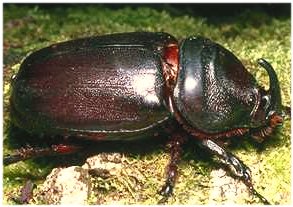
University of Exeter biologists say that some female beetles often mate simply to quench their thirst and overcome dehydration. The sexual imperative is provided by male beetles who produce unusually large ejaculates (up to 10 percent of their body weight), tempting dehydrated females to accept sexual invitations simply to get hold of the water in the seminal fluid.

Published in Animal Behaviour, the study examined the behaviour of the beetle Callosobruchus maculates, a serious pest in warm climates. Some females were given unlimited access to water while others were not and all the females were free to mate. The researchers found that thirsty females mated 40 percent more frequently than those with free access to water.

The University of Exeter's Dr Martin Edvardsson explained that the female beetles can absorb the water in the seminal fluid through their reproductive tracts and need to mate less frequently the more water they take from each mating. This is to a male's advantage, says Edvardsson, because the longer the female goes without mating with another male, the greater his chance of successful fertilization. By transferring a large amount of water with the sperm, a male can help ensure his sperm has more time to fertilize the eggs without having to compete with the sperm from future matings.

"The large ejaculates may have evolved because males can make it less beneficial for females to re-mate by providing them with a large amount of water," speculated Edvardsson. Because there are always costs as well as benefits associated with mating, similar trade-offs are likely to be important in many species where males provide their mates with material resources. "The key thing," says Dr Edvardsson, "is that the resource provided by males is less beneficial to females the more of it they already have, like water or food for example."

Related articles:
Researchers Investigate Giant Sperm Paradox
Balls vs Brains In Batty Battle For Evolutionary Success
Rodent Sperm Cooperate For Success
For Some Females, Size Does Matter
Promiscuous Females Make For Competitive Sperm


Source: University of Exeter


Discuss this article in our forum

Home         All The News      Science Forum         Books, Books, Books         Curiosity Shop         About

The terms and conditions governing your use of this website.
Copyright © 1997 - 2010 Science a Go Go and its licensors. All rights reserved.