
Landowners in the southern United States who are planting pine plantations may be contributing to rising carbon dioxide levels, says a study from Ohio State University. The researchers said that while planting trees is generally considered to be environmentally beneficial, pine plantations are in fact not that helpful. This is because pine plantations don’t retain carbon as well as hardwood or natural pine forests, said study co-author Brent Sohngen. He added that, rather than pine, landowners should be looking at other tree types if they wanted to lower carbon dioxide levels.
Sohngen’s study, appearing in Ecological Economics, estimated that some 10 million acres (about the size of New Hampshire and Vermont) of mainly hardwood and natural pine forests will be chopped down to make way for pine plantations by 2030 in just three Southern states. That translates into roughly 700,000 tons more carbon dioxide released into the atmosphere annually, or 21 million tons over the 30-year period.
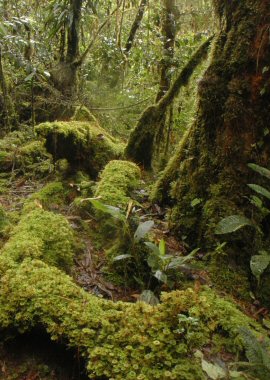
Hardwood forests tend to store more carbon than pine plantations do because a hardwood forest has more organic matter – leaves, branches, roots, and a mix of tree species – than a pine plantation does, and more organic matter means more storage space for carbon. Natural pine stands, with a variety of plant and tree species growing in them, also have more organic matter than a carefully cultivated pine plantation.
Sohngen believes that owners of hardwood and natural pine forests should be encouraged to hold on to their stands, possibly with subsidies or carbon credits. Such subsidies would help close the gap between earnings from pine plantations and those from hardwood and natural pine stands. “Right now, landowners can make more money from pine than from hardwood stands,” Sohngen said. “Historically, pine plantations are much more productive in terms of timber products. But maintaining hardwood and natural pine forests is an efficient way to store carbon. We can encourage landowners to hold on to these stands – and help reduce carbon dioxide in the atmosphere – by subsidizing their costs.”
Source: Ohio State University
Related posts:
 Urgent rethink required on Earth’s carbon-sinks, suggests study
 Unusual carbon-based molecule detected 27,000 light years away
 Biofuels’ “green” credentials questioned
 Ancient glaciation period yields clues to carbon cycle anomalies
 Arctic Soil Carbon Vastly Underestimated
 Bacterium That Eats Radioactive Garbage And Generates Electricity Has Scientists Excited



Comments are closed.