
Scientists are starting trials to see if a genetically modified form of the bacteria E. coli could be used to make succinate, a key ingredient of many plastics, drugs, solvents and food additives. With fossil fuel reserves dwindling, finding replacements for key chemicals previously extracted from fossil fuels is a matter of some urgency for the chemical industry.
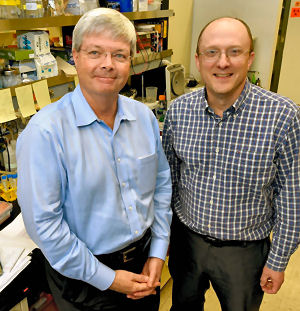
Succinate, a key chemical with many applications, has been the focus for researchers at Rice University. Their technology uses the bacteria E. coli to metabolize glucose and produce almost pure succinate. “Succinate is a high-priority chemical that the U.S. Department of Energy has targeted for biosynthesis,” said process co-developer George Bennett, of Rice University. “One reason for this is succinate’s broad utility – it can be used to make everything from non-toxic solvents to plastics, drugs and food additives. Succinate’s also a priority because some bacteria make it naturally, so we have a metabolic starting place for large-scale fermentation.”
Bennett and San’s bacterium – known only by the cryptic name SBS550MG – contains a clever bit of metabolic engineering that allows it to produce succinate in two different ways. One method exists in wild strains of E. coli and has been modified with the deletion of four genes, each of which codes for a protein that interferes with or limits E. coli‘s ability to turn glucose into succinate. Bennett and San then activated a second pathway and stimulated production by adding genes from lactococcus bacteria and sorghum.
The two genetic pathways metabolize glucose and produce succinate via dissimilar chemical reactions so the two methods don’t compete or interfere with one another. In fact, Bennett and San designed the paths to be complimentary, but even so, they were gratified to see how well the process worked once both paths were put in place. “Our experiments in the laboratory have produced near-maximum yields, with almost all the glucose being converted into succinate,” said San. “The implementation was actually easier than we expected because the cells did the balancing themselves.”
Their technology is taking its first step from the lab to the marketplace this month with the start of industrial scale-up efforts in Kansas. Bennett and San are working with Kansas-based AgRenew Inc., which has just begun testing how to use farm-grown products as feed-stocks for the succinate-producing bacteria. Bennett and San said they will continue to refine the organism to produce higher yields and fewer byproducts.








Comments are closed.