
Propellant-free propulsion technology has taken a critical step toward reality, completing a series of systems tests at NASA’s Marshall Space Flight Center in Huntsville, Ala.
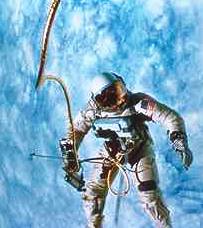
The Propulsive Small Expendable Deployer system – called ProSEDS – is a tether-based propulsion experiment that draws power from the space environment around Earth, allowing the transfer of energy from the Earth to the spacecraft.
Inexpensive and reusable, ProSEDS technology has the potential to turn orbiting, in-space tethers into “space tugboats” — replacing heavy, costly, traditional chemical propulsion and enabling a variety of space-based missions, such as the fuel-free raising and lowering of satellite orbits.
The initial flight of ProSEDS, scheduled for early summer, will mark the first time a tether system is used for propulsion. To be launched from Kennedy Space Center, Fla., ProSEDS will fly aboard an Air Force Delta II rocket and demonstrate an electrodynamic tether’s ability to generate significant thrust.
“We achieved an important milestone with our tests in November,” said ProSEDS project manager Leslie Curtis of the Marshall Center’s Space Transportation Directorate. “Using a vacuum chamber to represent the space environment, we successfully simulated the first 16 hours of the experiment’s initial flight.”
Although the mission could last as long as three weeks, the first day is the most critical, because the primary objective of demonstrating thrust with the tether should be achieved during the experiment’s first 24 hours.
During the mission profile tests last November, engineers from the Marshall Center, along with their partners in academia and industry, tested the experiment’s multiple systems as if the flight were actually taking place.
“We took ProSEDS through every step of the mission’s first 16 hours,” Curtis said. “We operated its hardware, batteries, cables and software, activated and deactivated systems, and collected and transmitted data as we would during an actual flight.”
During the tests, all subsystems functioned as designed, including the hollow cathode plasma contactor, a critical component that enables the tether system to complete its electrical circuit.
During the flight, the process of collecting energy will begin when the electromagnetic portion of the tether collects electrical current along the tether’s length as it moves through the Earth’s magnetic field. To keep the current flowing, the plasma contactor reconnects the electrons with the invisible, electrically charged plasma that surrounds the Earth, emitting the electrons back into space so it can complete its circuit.
“We were pleased to see the plasma contactor perform well throughout the test, even under conditions outside its expected operating range,” said Curtis. “It demonstrated the robustness of its design and the performance range of the ProSEDS operating system.” The contactor was designed and built by the Electric Propulsion Laboratory in Monument, Colo.
Additional testing of ProSEDS hardware leading to its launch will include thermal testing, tether deployment and final system verification with flight software.







Comments are closed.