
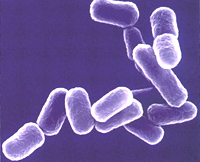
Investigating the aging process in flies, researchers from the University of Southern California (USC) have established that while older flies accumulate very large populations of bacteria, the infestations don’t seem to hasten the insects’ death. The surprising finding, published in Cell Press, suggests that the energy expended by the immune system to fight the burgeoning bugs comes without a longevity trade-off.
“It’s a surprise,” said USC’s John Tower. “Even though the flies were accumulating so much bacteria and a robust immune response to that bacteria, it’s not limiting how long the flies live. The question is, if it’s not bacteria that limit life span, then what is it?”
But since immune function is impaired with age, it is expected that “bacterial load” would increase or be otherwise altered as people grow older. Indeed, studies have found shifts in humans’ intestinal bacteria with age and evidence that bacteria may blossom in the prostate and other organs of the elderly.
To understand the effects of bacterial bloat, researchers turned to Drosophila flies – an ideal analog in which to study most aspects of immunity and the metabolic effects of infection. The researchers showed that the insects exhibited dramatic increases in many types of bacteria during aging, both inside the body and on the surface. “It was gradual across their life span,” Tower said. “It went from virtually undetectable to a million or more per fly.”
Surprisingly, treatments that reduced the number of bacteria had no effect on the fly’s life span. That discovery led the researchers to conclude that, at least under optimal laboratory conditions, Drosophila can tolerate a significant number of bacteria and mount a strong innate immune response against them without cutting their 65-day lives any shorter.
“There has been some thinking in general that life span is regulated according to trade-offs – that the body has only so much energy to devote to different processes,” Tower said. “If you devote a lot to controlling bacteria, preventing them from growing to a toxic level, then that energy isn’t available to maintain tissues and organs. However, we found no effect on the animals’ longevity even when their bacteria are taken from one extreme to the other.”
Related articles:
Skin Samples Rife With Unknown Bacteria
Bacteria Hysteria In The Supermarket
Probiotics Touted As New Weapon Against Hospital Bugs
Old Age Appears To Be A Recent Invention
















Comments are closed.