Home   |   News    |   Discussions   |   Books   |   Curiosities
Search
Custom Search
Popular Reads

Earthquakes and animal behavior
LHC may produce time travelling particles
Country boys boast bigger junk
Running the numbers on alien life
Uh-oh, placebo
Forgetful? Blame your house
Pill to blame for rise in prostate cancer?
Cat parasite has global ambitions
Carbon monoxide keeps city dwellers happy
Magnetic field alters moral judgments
Stars manufacturing organic matter?
Unnatural selection: Courtesy of The Pill
Men 2% funnier than women
Parasite rewires sexual attraction
Novel psychiatric drugs take aim at gut bacteria
Discussions
General Science

Not-Quite Science

Physics

Climate Change

Science Fiction

Past Forums

Sponsored Links
Browse

Animal Kingdom

Biology

Climate Change

Environment

Evolution

Genetics

Humans

Mind & Brain

Prehistory

Health & Diet

Health Threats

Health & Environment

Health: From The Lab

Mental Health

Reproductive Health

Energy Alternatives

Chemistry

Computing & Electronics

Nanotechnology

Pimping Nature

Robotics & AI

Physics

Space


Curiosities
Sci Shop
Peculiar and bizarre scientific stuff that you didn't even know existed and you don't need.
Books
Book Reviews
Rusty Rockets lists his all-time favorite science titles.
Archives
2012 2011 2010
2009 2008 2007
2006 2005 2004
2003 2002 2001
2000 1999 1998
Feature Archive


28 January 2005
Male Sexual Orientation Genes Identified
by Kate Melville

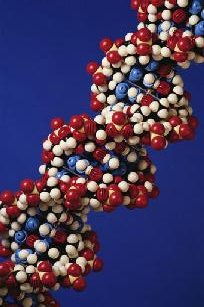
A study appearing in the journal Human Genetics has identified several areas of DNA that appear to influence whether a man is heterosexual or gay.

University of Illinois at Chicago researcher Brian Mustanski found stretches of DNA that appeared to be linked to sexual orientation on three different chromosomes in the nucleus of cells of the human male. "There is no one 'gay' gene," said Mustanski. "Sexual orientation is a complex trait, so it's not surprising that we found several DNA regions involved in its expression. Our best guess is that multiple genes, potentially interacting with environmental influences, explain differences in sexual orientation."

The genomes of 456 men from 146 families with two or more gay brothers were analyzed. While earlier studies had focused solely on the X chromosome, one of the two sex chromosomes, the present study examined all 22 pairs of non-sex chromosomes in addition to the X chromosome. The other sex chromosome, called Y, was not explored. Identical stretches of DNA on three chromosomes - chromosomes 7, 8 and 10 - were found to be shared in about 60 percent of the gay brothers in the study, compared to about 50 percent expected by chance. The region on chromosome 10 correlated with sexual orientation only if it was inherited from the mother.

"Our study helps to establish that genes play an important role in determining whether a man is gay or heterosexual," said Mustanski.


Social

Follow Science a GoGo


Home         All The News      Science Forum         Books, Books, Books         Curiosity Shop         About

The terms and conditions governing your use of this website.
Copyright © 1997 - 2012 Science a Go Go and its licensors. All rights reserved.