
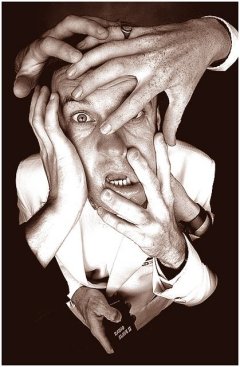
People who cope with a life-threatening situation by ignoring their anxiety or diverting their attention away from it may be doing themselves a favor. Such practices may act as a buffer against stress disorders, according to the results of an Israeli study of heart attack patients. “The findings of this study suggest that a repressive coping style may promote adjustment to traumatic stress, both in the short and longer term,” says lead study author Karni Ginzburg, Ph.D., of the Bob Shapell School of Social Work at Tel Aviv University in Israel.
During their hospitalization, the study participants took a diagnostic test for acute stress disorder. Symptoms of this disorder, which can occur immediately after a traumatic event, include significant distress, trauma flashbacks, difficulty carrying out everyday tasks, insomnia, irritability and poor concentration. Post-traumatic stress disorder is diagnosed when such symptoms occur more than a month after the traumatic event. The researchers visited the patients seven months after their hospitalization to test for PTSD.
The researchers also gave study participants a test to determine if their coping style was repressive, in which the individual avoids anxious thoughts about a trauma, despite any anxiety they’re experiencing on a physiological level. “Previous studies indicated that repressors, who report low levels of anxiety, actually manifest high levels, as indicated by various physical and behavioral measures, such as muscle tone, heart rate, blood pressure and facial expressions,” says Ginzburg.
The repressive study participants had lower rates of acute stress disorders than the highly anxious study participants did, but higher rates than the low-anxiety study participants did. Regarding PTSD, the repressors had the lowest rates, and those repressors who did develop PTSD had less severe cases, the researchers found. The study results are published in the September/October issue of the journal Psychosomatic Medicine.
The effectiveness of the repressive coping style in dealing with trauma may be bolstered by traits often associated with this style.
“Prior studies report that repressors tend to perceive themselves as competent, self-controlled and having adequate coping skills,” says Ginzburg. Such individuals have also been found to have a more positive self-image and to be “more inclined to unrealistic optimism,” according to the study.
Some say the repressive coping style is an inauthentic way to shield oneself from the fullness of an experience, even a trauma, while others say repression can be a good problem-solving tool in a stressful circumstance.
“In these cases, the repressor is able to approach the trauma-induced emotions and cognitions gradually, in small doses, and without being overwhelmed by them, and also to maintain his or her hope and courage,” Ginzburg says.











Comments are closed.