

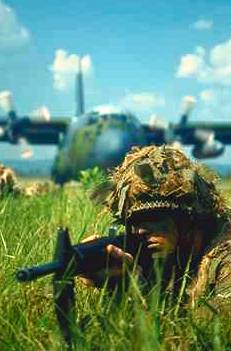
A new study in the journal Conservation Biology shows that more than 80 percent of the world’s major armed conflicts from 1950-2000 occurred in regions identified as the most biologically diverse and threatened places on Earth. The study compared major conflict zones with the Earth’s 34 biodiversity hotspots identified by Conservation International (CI). The hotspots are considered top conservation priorities because they contain the entire populations of more than half of all plant species and at least 42 percent of all vertebrates.
“That the richest storehouses of life on Earth are also the regions of the most human conflict tells us that these areas are essential for both biodiversity conservation and human well-being,” said Russell A. Mittermeier, president of CI and an author of the study. “Millions of the world’s poorest people live in hotspots and depend on healthy ecosystems for their survival, so there is a moral obligation – as well as political and social responsibility – to protect these places and all the resources and services they provide.”
Examples of the nature-conflict connection include the Vietnam War, when poisonous Agent Orange destroyed forest cover and coastal mangroves, and timber harvesting that funded war chests in Liberia, Cambodia and Democratic Republic of Congo (DRC). In those and countless other cases, the collateral damage of war harmed both the biological wealth of the region and the ability of people to live off of it.
“The consequences extend far beyond the actual fighting,” said study co-author Thor Hanson, from the University of Idaho. “War preparations and lingering post-conflict activities also have important implications for biodiversity hotspots and the people who live there.”
“The fact that so many conflicts have occurred in areas of high biodiversity loss and natural resource degradation warrants much further investigation as to the underlying causes, and strongly highlights the importance of these areas for global security,” Mittermeier added.
The study concluded that international conservation groups – and indeed the broader international community – must develop and maintain programs in war-torn regions if they are to be effective in conserving global biodiversity and keeping ecosystems healthy. It also called for integrating conservation strategies and principles into military, reconstruction and humanitarian programs in the world’s conflict zones.
Related:
The biodiverse hotspots
Petite Nuke Exchange Could Derail Global Climate
War Over Water
Chill Out… And Fight!
Source: Conservation International






Related posts:
 Squirrels and birds inspire latest deceptive robots
 Black Queen Hypothesis offers new interpretations of organism interdependency
 Return of wolves triggers renaissance in Yellowstone ecosystem
 Organic farming “a luxury we can’t afford,” concludes UK report
 Limited Resources The Key To Biodiversity?
 Testosterone Apocalypse!