

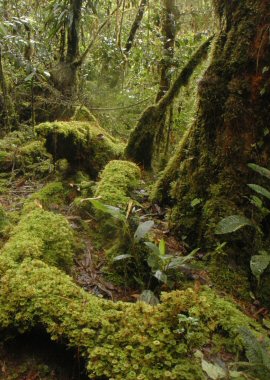
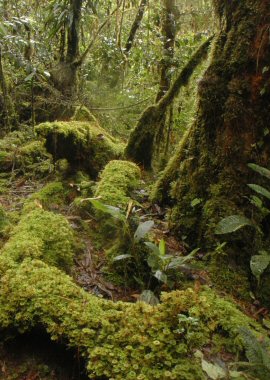
An expedition led by Conservation International (CI) to one of the most isolated regions of western New Guinea has discovered what the multinational exploration team call a ”Lost World” of new species, giant flowers, and rare wildlife. The team included U.S., Indonesian and Australian scientists who found dozens of new species including frogs, butterflies and plants. They also identified the first new bird – the orange-faced honeyeater – from New Guinea in more than 60 years.
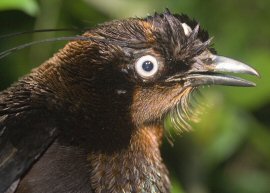 The scientists captured the first photos of exotic birds such as a male Berlepsch’s Six-Wired Bird of Paradise (Parotia berlepschi) and solved the mystery of its true origin. First described in the 19th century through specimens collected by indigenous hunters from an unknown location, the species had been the focus of several past expeditions that had failed to find it. The bird is named for its six head feathers which it raises in courtship displays. The team witnessed such a display by a male in their field camp, the first time the mating ritual has been seen by Western scientists.
 The new species of honeyeater, the first new bird discovered in New Guinea since 1939, has a bright orange face-patch with a pendant wattle under each eye. Other discoveries included what may be the largest rhododendron flower on record – six inches across – along with more than 20 new frogs, four new butterflies and five new palms.
The local Kwerba and Papasena people assisted the Conservation International team and served as guides and naturalists for the expedition into the vast jungle tract. The mountain range’s interior – an area of old growth tropical forest about the size of Rhode Island – remains untouched by humans, and the entire Foja forest tract of more than 1 million hectares constitutes the largest essentially pristine tropical forest in Asia and, according to CI, is an important region for biodiversity conservation.
Source: Conservation International
Pics courtesy Conservation International



Related posts:
 New analysis pokes holes in biodiversity’s supposed link to human disease
 Mass extinction event linked to invasive species
 Last ditch appeal to save irreplaceable seed bank from bulldozers
 Frog communities undergoing “McDonaldization”
 Biodiverse regions are hotspots for war
 Biodiversity Crunch Threatens Plant Productivity