Home   |   News   |   Discussion Forum   |   Books   |   Curiosity Shop
Discussion Forum
Recent Posts
Philosophy of Religions--all religions, including,
Revlgking
Today at 07:41 PM
edge of space; plausible
Mike Kremer
Today at 10:05 AM
Zealotry over Global Warming
ImranCan
Today at 07:07 AM
How Reliable are those climate models?????
Canuck
Yesterday at 06:38 PM
Biofuels Starve the Poor
redewenur
Yesterday at 08:00 AM
Artic Ice Free by 2013 !!
samwik
Yesterday at 01:07 AM
Semantics, Etymology, Syntactics, Etc.
samwik
Yesterday at 12:10 AM
Humanzee? Ape Human Cross
Ellis
05/09/08 11:43 PM
The Mystery of Global Warming's Missing Heat
Mike Kremer
05/09/08 04:12 PM
Einstein...
xumpman
05/09/08 11:40 AM
Hot Topics

The Environment

Evolution

Space

Mind/Brain

Electronics

Climate Change


Sponsored Links
Most Read
Hormones Gone Wild
Homo Superior
The Universe As Magic Roundabout
In Space, No One Can Hear You Say "Doh!"
Bow To Your Insect Overlords!
Bionics
Sex And The Schizoid Factor
Delusions And Mental Illness
We Come In Peace – NOT!
Eeew!
Small Penis Syndrome A Big Problem?
Have You Hugged Your Robot Today?
Down On The Farm - Yields, Nutrients And Soil Quality
Cat Parasite Has Global Ambitions
POP Goes The Planet
The Disappearing Male
Missing Link A Tripping Chimp?
Inorganic Dust Formations Alive?
Science Shopping
Sci Shop
Peculiar scientific stuff that you didn't even know existed and you don't need.
News And Research

Physics

Climate Change

Space

Natural World

Health

Technology


All 2008 News

Rusty's Reading List
Sci Books
Join Rusty Rockets for the lowdown on what you should be reading.
Search
Google

Science a GoGo Web
Archives
2008 2007
2006 2005 2004
2003 2002 2001
2000 1999 1998
Discussions
Features


15 November 2005
Drug Gene Link To Human Evolution
by Kate Melville

Humans are much more perceptive than other primates (well, some of us anyway), but the list of genes known to be implicated in humanity's separation from the other apes is a short one. In fact, the genes controlling the development of the human brain almost always turn out to be nearly identical to those in chimpanzees.

But in a finding that could finally shed light on such evolutionary conundrums, researchers from Indiana University Bloomington (IUB) have found that a gene thought to influence perception and susceptibility to drug dependence is expressed more readily in human beings than in other primates. This difference coincides with "evolutionary bursts" that are evident in our lineage, say the researchers in the journal PLOS Biology.

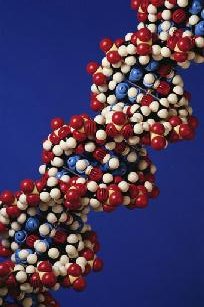
The gene in question encodes prodynorphin, an opium-like protein implicated in the anticipation and experience of pain, socialization and bonding, as well as learning and memory. Prodynorphin is a precursor molecule of the neurotransmitters known as opioids, because their action is akin to the stimulatory effects caused by the drug opium and derivatives like heroin. As it turns out, the protein prodynorphin is identical in humans and chimps, but it's the gene's promoter sequence - upstream DNA that controls how much of the protein is expressed - where the big differences are.

The human prodynorphin gene, when induced, was 20 percent more active than the chimpanzee prodynorphin gene. "Humans have the ability to turn on this gene more easily and more intensely than other primates. Given its function, we believe regulation of this gene was likely important in the evolution of modern humans' mental capacity," said IUB computational biologist Matthew Hahn.

Hahn's research supports a growing consensus among evolutionary anthropologists that human divergence from the other great apes was fueled not by the origin of new genes, but by the quickening (or slowing) of the expression of existing genes.

Interestingly, earlier studies have observed variation in expression levels within humans. Hahn and co-researchers examined the prodynorphin gene in human beings from around the world and in non-human primates to see whether such variation was commonplace and whether that variation affected gene expression.

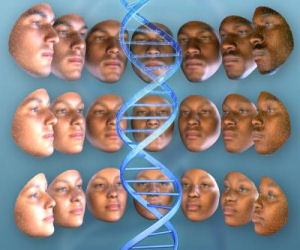
The researchers found a surprisingly large amount of genetic variation in the prodynorphin gene's promoter in Chinese, Papua New Guinean, Indian, Ethiopian, Cameroonian, Austrian and Italian populations.

The results from chimpanzees and other apes were far more homogeneous and the researchers believe that the high genetic variation in the prodynorphin promoter is unique to humans.

How prodynorphin influences human perception is unknown. Evidence for its various effects comes entirely from clinical studies of people who have mutations in the gene. Past studies have indicated a positive correlation between lower prodynorphin levels and susceptibility to cocaine dependence.

Source: Indiana University Bloomington



Home   |   News   |   Discussion Forum   |   Books   |   Curiosity Shop   |   About
The terms and conditions governing your use of this website.
Copyright © 1997 - 2008 Science a Go Go and its licensors. All rights reserved.