
 Robotics And AI
11 May 2015
Memristor artificial synapse circuit demonstrated
In what its developers say is a significant step toward brain-like computing; a memristor-based circuit of about 100 artificial synapses has performed a typical human task: image classification...
4 September 2014
Scientists demo first direct brain-to-brain communication between humans
Using non-invasive techniques, an international team of researchers have demonstrated direct brain-to-brain communication between two human subjects located 5,000 miles apart...
14 August 2014
Japanese scientists hijack neural signaling to bypass spinal injuries
Spinal cord injuries that result in paraplegia may one day be treatable using a technique that bypasses the damaged neural pathways that connect the brain to the spinal locomotor center...
17 June 2013
Robo-cat offers speed and agility for search and rescue
Swiss robotics researchers say the design of their cat-like robot is based on meticulous observations of the feline leg, giving the robot all the speed and stability that real cats have...
5 June 2013
Thought-controlled drone demonstrated
In what they say is the first step toward restoring the autonomy of paralysis sufferers, researchers have demonstrated complex maneuvering by a drone controlled only by the user's thoughts...
12 May 2013
Liquid hydrogen fueled drone shatters endurance record
Researchers at the U.S. Naval Research Laboratory have set a new continuous flight record with an electric drone powered by a fuel cell running from liquid hydrogen in cryogenic storage...
2 May 2013
Tiny robotic insect makes first controlled flight
Inspired by the biology of a fly, with submillimeter-scale anatomy and two wafer-thin wings that flap 120 times per second, this tiny robotic insect that's half the size of a paperclip represents the cutting edge of micro-manufacturing...
18 April 2013
Ultracheap tactile sensor for robots unveiled
Giving robots a sense of touch has traditionally been an expensive and complex exercise with results that were often less than useful. Now, however, a newly developed tactile sensor using off-the-shelf cell phone components could dramatically change how robots interact with the world around them...
4 December 2012
Squirrels and birds inspire latest deceptive robots
With funding from the Navy, Georgia Tech researchers are building robots that can deceive each other in a manner similar to the way birds and squirrels confuse and harass predators...
3 October 2012
UK scientists aim to create artificial bee brain
Hoping to gain insights into what's needed for creating artificial intelligence, UK scientists are embarking on a project to produce a computer simulation of a honeybee brain...
30 June 2012
Researchers hack and commandeer drone
For the first time, researchers have demonstrated that the GPS system used for navigation by an unmanned aerial vehicle, or drone, can be commandeered by an outside source to take control of the vehicle...
27 June 2012
Smartphone powered robotic DJ set for party duties
The annoying guy at parties who keeps changing the music may be facing redundancy, thanks to a new robot DJ docking station that chooses music, reacts to crowd feedback and dances appallingly...
21 June 2012
AI: size matters
MIT scientists have discovered that the brain processes objects based on their physical size, with a specific region of the brain reserved for recognizing large objects and another reserved for small objects. The findings could have major implications in robotics and artificial intelligence...
17 May 2012
Thought-controlled robotic arm demonstrated
Using only her thoughts, a paralyzed woman was able to reach for and drink from a bottle that was being manipulated by a robotic arm...
3 April 2012
"Super-Turing" AI gets development funding
Computer scientist Hava Siegelmann has received funding to develop what she calls a "Super-Turing" based artificial intelligence. Based on analog recurrent neural networks, Siegelmann says the machine will usher in a level of intelligence not seen before in artificial computation...
1 March 2012
Supersonic UAV with sub-$100k price tag mooted
Powered by a novel, super-efficient jet engine, an unmanned aircraft that will fly at Mach 1.4 is nearing commercialization, say the designers behind the ultra-cheap drone...
15 July 2011
This is your brain on androids
Ever watched a kids' movie where the animated human characters are realistic but just not quite right and maybe a bit creepy? Then you've probably been a visitor to what's called the "uncanny valley." Until now, the uncanny valley was poorly understood, but new MRI brain scans help explain why we feel repulsed when confronted with fake humans that appear too human...
24 June 2011
Demonstration of memflector brings brain-like computing a step closer
The first ever demonstration of simultaneous information processing and storage using phase-change materials points the way to computers that more closely resemble biological systems...
13 June 2011
MRI scans predict pop music success
An experiment originally designed to see how peer pressure affects teenagers has also been found to accurately reflect the success or failure of pop songs...
29 November 2010
Academics bemoan Google's lack of transparency and the homogenization of information
Google's monopolization of online academic search and lack of transparency is leading to less information diversity, say European scientists who warn that the production of scientific knowledge is "way too important to leave to companies and intelligent machines"...
13 September 2010
Pressure-sensitive crystalline semiconductor used to create artificial skin
Engineers have developed a pressure-sensitive electronic material from semiconductor nanowires that will help overcome a key challenge in robotics: adapting the amount of force needed to hold and manipulate a wide range of objects...
10 September 2010
Robots taught to deceive
Researchers have developed algorithms that allow a robot to determine whether it should deceive a human or other intelligent machine and which techniques to use for the best deceptive strategy...
29 June 2010
Transform! Origami robots self-fold
Researchers have demonstrated a concept they call "origami robotics" using a single thin sheet composed of interconnected triangular sections that can transform itself into different shapes...
15 April 2010
Cheap-and-cheerful memristor tech set to spur AI research
The recent demonstration of mass-produced memristors performing stateful logic operations and their likely application in an artificially rendered memory and learning process known as "spike timing dependent plasticity" will make memristors the must-have tinkertoy for AI researchers...
7 December 2009
Implant enables direct alphanumeric input from brain to computer
Using a technique known as electrocorticography, neuroscientists at the Mayo Clinic have demonstrated how brain waves can be interpreted to directly enter alphanumerical characters into a computer...
25 June 2008
Researchers Demo Neural Implant That "Learns"
The neural implants used to control prosthetic limbs have traditionally been relatively crude affairs, relying on an inflexible pattern of signals from the brain to activate a robotic limb in a preordained manner. Now, however, University of Florida researchers have devised a way for neuronal devices to evolve with the brain as it learns...
29 May 2008
Monkey Mind Over Matter
A monkey has successfully fed itself using a robotic arm controlled by signals from its brain. The researchers involved say the breakthrough could lead to the development of brain-machine interfaces for people with spinal cord injuries and those with "locked-in" conditions such as Lou Gehrig's disease...
22 May 2008
Jumping Robot Designed With Rough Terrain In Mind
European researchers have unveiled a novel, grasshopper-inspired jumping robot that weighs a miniscule 7 grams but can jump 1.4 meters - more than 27 times its body length. The tiny robot is designed to explore rough, inaccessible terrain or to aid in search and rescue operations...
2 November 2007
 In Design We Trust
Automated machines are driving us all crazy for the very same reasons the Terminator was considered the perfect killing machine. They can't be bargained with, and they can't be reasoned with. They don't feel pity or remorse or fear and they absolutely will not stop, ever, until you fall into a pathetic sobbing heap on the floor...
19 October 2007
 Context And Computer Vision
A bunch of computer scientists believe they can create computers capable of seeing the world with a human perspective using a simple, but lesser-known, publicly available widget from Google...
23 March 2007
 Have You Hugged Your Robot Today?
Earlier this month, Korea announced that it was drafting a set of ethical guidelines for robot producers, users - and the robots themselves. "How quaint," I thought, until further research revealed that assorted futurists and AI experts are at this very moment diligently working toward establishing equal rights for robots...
2 March 2007
Researchers Map Neuron Connections
A modified rabies virus has been used to identify all of the connections to a single brain neuron, a significant step toward understanding how the brain is "wired"...
29 January 2007
Researchers Plan Soft-Bodied Robots
A multidisciplinary initiative focused on engineering a new class of robots that are completely soft-bodied has been launched...
18 December 2006
Direct Brain Control Of Robot Demonstrated
A metal skullcap with electrodes sticking out allows the wearer to control the movement of a humanoid robot using signals read directly from their brain...
18 August 2006
A Portrait Of The Artist As A Tin Man
What is creativity? What creates value in art? If creativity is derived from the ability to link together and express diverse inputs, then would robots capable of doing this be deemed to be creative? But if we can't comprehend and define our own creativity, how can we ever expect a robot to create something that we consider art?
10 August 2006
Novel Robot Will Be "Dynamic And Graceful," Says Prof
A robot that moves around thanks to an inverse mouse-ball drive could provide a much better platform for human interaction than wheeled or humanoid-type legged robots...
19 May 2006
Software Personalities To Populate Virtual World
Developed by AI experts, computer scientists, sociologists and linguists; a virtual world populated with software entities that interact socially is about to be switched on...
5 May 2006
Bringing Up BabyBot
Researchers hope BabyBot, a new robot modeled on a human infant, will bring science closer to understanding consciousness. The methodology behind BabyBot is in stark contrast to many other AI initiatives that have expended a great deal of effort into cramming prefabricated "knowledge" and "facts" into machines in the hope that they will ultimately end up mimicking human intelligence. Results from this top-down approach range from patchy to downright disappointing, so it's no surprise that a growing number of AI researchers are now looking more seriously at BabyBot's bottom-up approach...
28 April 2006
Artificial Eye Borrows From Nature
Berkeley researchers have built an artificial compound eye using self-aligning and self-writing techniques borrowed from nature...
21 April 2006
 Bionics: The Six Million Dollar Question
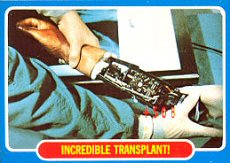
You won't hear much about bionics outside medical conferences these days, but when The Six Million Dollar Man hit the airwaves during the 70s, it was a hot topic of conversation around the water cooler. Today, against a backdrop sketched by nanotech futurists such as Ray Kurzweil, bionics is set for a comeback, but this time, we're told, it'll be for real. The six million dollar question is: could someone equipped with today's bionics go mano a mano against Col. Steve Austin and come out on top?
17 March 2006
Super Strong Artificial Muscles Could Power Next Generation Of Robots
Radical new artificial muscles fueled by alcohol or hydrogen could power prosthetic limbs, autonomous robots and marine and aerospace vehicles...
23 November 2005
Brain Begins To Reveal Its Codes
Neuroscientists have been able to "read out" part of the brain's visual system's code involved in recognizing visual objects...
14 October 2005
 Artificial Intelligence In The Garden Shed
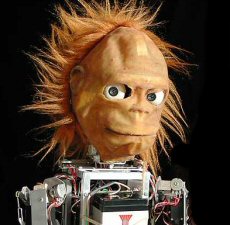
Chess programs, digital dogs and robot vacuum cleaners are all well and good but they do not represent self-generated thought, as they can only perform the tasks that their programmers have fed them. To create true artificial intelligence we almost certainly need to first understand human consciousness. And the best way to do that, according to one maverick scientist, is to build your own android...
20 June 2005
Open The Pod Bay Doors... Please
A new software language promises to equip computers with reasoning powers that better reflect the subtleties intended by their human operators...
Related:
Energy Alternatives
Chemistry
Electronics
Nanotechnology
Pimping Nature