Discussion Forums
General Science

Not-Quite Science

Physics

Climate Change

Science Fiction

Past Forums

Search Science a GoGo
Custom Search
Hang Out With Us

Follow scienceagogo on Twitter

Sponsored Links

News And Research

Animal Kingdom

Biology

Climate Change

Environment

Evolution

Genetics

Humans

Mind & Brain

Prehistory

Health & Diet

Health Threats

Health & Environment

Health: From The Lab

Mental Health

Reproductive Health

Energy Alternatives

Chemistry

Computing & Electronics

Nanotechnology

Pimping Nature

Robotics & AI

Physics

Space


Science Shopping
Sci Shop
Peculiar and bizarre scientific stuff that you didn't even know existed and you don't need.
Science Books
Book Reviews
Rusty Rockets lists his all-time favorite science titles.
Archives
2010
2009 2008 2007
2006 2005 2004
2003 2002 2001
2000 1999 1998
Feature Archive

Share/Bookmark


15 March 2010
Opium poppy gives up its genetic secrets
by Kate Melville

Codeine, usually synthesized from the morphine found in the opium poppy, is one of the world's most commonly prescribed painkillers. But despite its widespread use, poppies are only grown as a commercial crop in a handful of countries, thus making many nations dependent on opiate imports.

Now, however, researchers at the University of Calgary have discovered the unique genes that allow the opium poppy to produce painkillers such as codeine and morphine. This, say the research team, will open the door to alternate methods of producing painkillers, possibly even by manufacturing them in a lab using micro-organisms.

"The enzymes encoded by these two genes have eluded plant biochemists for a half-century," says researcher Peter Facchini. "In finding not only the enzymes but also the genes, we've made a major step forward. It's equivalent in finding a gene involved in cancer or other genetic disorders."

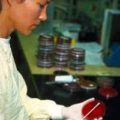
Researcher Jillian Hagel (pictured) did the hard yards of finding these key genes as part of her Ph.D. research. She succeeded by using leading-edge genomics techniques that helped her sort through up to 23,000 different genes and ultimately find a gene called codeine O-dementhylase (CODM) that produces the plant enzyme converting codeine into morphine.

The research, appearing in Nature Chemical Biology, will allow scientists to synthesize codeine and other opiate drugs more efficiently and economically in controlled bioprocessing facilities. "Our discovery now makes it possible to use microorganisms to produce opiate drugs and other important pharmaceuticals," said Facchini. Hagel added that one of the next steps for the research team is using the codeine gene to produce pharmaceuticals in yeast or bacteria.

Related:
GM Bacteria Making Plastics
Folk-medicine herbal alkaloid synthesized
Bio-Engineered Yeast Cranks Out Pharmaceuticals


Source: University of Calgary


Share/Bookmark Discuss in our forum

Home         All The News      Science Forum         Books, Books, Books         Curiosity Shop         About

The terms and conditions governing your use of this website.
Copyright © 1997 - 2010 Science a Go Go and its licensors. All rights reserved.