Home   |   News    |   Discussions   |   Books   |   Curiosities
Search
Custom Search
Popular Reads

Earthquakes and animal behavior
LHC may produce time travelling particles
Country boys boast bigger junk
Running the numbers on alien life
Uh-oh, placebo
Forgetful? Blame your house
Pill to blame for rise in prostate cancer?
Cat parasite has global ambitions
Carbon monoxide keeps city dwellers happy
Magnetic field alters moral judgments
Stars manufacturing organic matter?
Unnatural selection: Courtesy of The Pill
Men 2% funnier than women
Parasite rewires sexual attraction
Novel psychiatric drugs take aim at gut bacteria
Discussions
General Science

Not-Quite Science

Physics

Climate Change

Science Fiction

Past Forums

Sponsored Links
Browse

Animal Kingdom

Biology

Climate Change

Environment

Evolution

Genetics

Humans

Mind & Brain

Prehistory

Health & Diet

Health Threats

Health & Environment

Health: From The Lab

Mental Health

Reproductive Health

Energy Alternatives

Chemistry

Computing & Electronics

Nanotechnology

Pimping Nature

Robotics & AI

Physics

Space


Curiosities
Sci Shop
Peculiar and bizarre scientific stuff that you didn't even know existed and you don't need.
Books
Book Reviews
Rusty Rockets lists his all-time favorite science titles.
Archives
2012 2011 2010
2009 2008 2007
2006 2005 2004
2003 2002 2001
2000 1999 1998
Feature Archive


21 October 2009
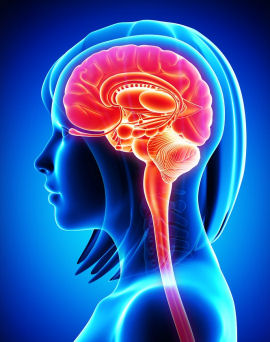
High protein diets shrink brain
by Kate Melville

Reported in the journal Molecular Neurodegeneration, a study by Alzheimer's researchers has found that a high protein diet, such as the Atkins diet, can lead to a smaller brain.

The researchers, from the US, Canada, and the UK, tested four different menus on mice that had been transgenically altered to provide a model of Alzheimer's disease.

The alterations in the mice allowed them to express a mutant form of the human amyloid precursor protein (APP). APP's role in the brain is not fully understood; however it is of great interest to Alzheimer's disease researchers because the body uses it to generate the amyloid plaques typical of Alzheimer's.

These mice were fed either a regular diet, a high fat/low carbohydrate diet, a high protein/low carb diet or a high carbohydrate/low fat option. The researchers then looked at the brain and body weight of the mice, as well as brain plaque build up and differences in the structure of several brain regions that are involved in the memory defect underlying Alzheimer's disease.

Unexpectedly, the mice fed a high protein/low carbohydrate diet had brains 5 percent lighter that all the others, and regions of their hippocampus were less developed. The researchers have put forward a tentative theory that a high protein diet may leave neurons more vulnerable to Alzheimer's plaque. Mice on a high fat diet had raised levels of plaque proteins, but this had no effect on plaque burden.

The pressing question, say the researchers, is whether these data have implications for the human brain. "Given the previously reported association of high protein diet with aging-related neurotoxicity, one wonders whether particular diets, if ingested at particular ages, might increase susceptibility to incidence or progression of Alzheimer's disease," said study leader, Sam Gandy, a professor at The Mount Sinai School of Medicine in New York City.

The only way to know for sure would require prospective randomized double blind clinical diet trials, Gandy believes. "This would be a challenging undertaking but potentially worthwhile. If there is a real chance that the ravages of Alzheimer's disease might be slowed or avoided through healthy eating. Such trials will be required if scientists are ever to make specific recommendations about dietary risks for Alzheimer's disease."

Related:
Processed foods linked to Alzheimer's and diabetes
Extreme Diet Nixes Alzheimer's
When Thinking Can Be Toxic
Source: Molecular Neurodegeneration


Social

Follow Science a GoGo


Home         All The News      Science Forum         Books, Books, Books         Curiosity Shop         About

The terms and conditions governing your use of this website.
Copyright © 1997 - 2012 Science a Go Go and its licensors. All rights reserved.