Home   |   News    |   Discussions   |   Books   |   Curiosities
Search
Custom Search
Popular Reads

Earthquakes and animal behavior
LHC may produce time travelling particles
Country boys boast bigger junk
Running the numbers on alien life
Uh-oh, placebo
Forgetful? Blame your house
Pill to blame for rise in prostate cancer?
Cat parasite has global ambitions
Carbon monoxide keeps city dwellers happy
Magnetic field alters moral judgments
Stars manufacturing organic matter?
Unnatural selection: Courtesy of The Pill
Men 2% funnier than women
Parasite rewires sexual attraction
Novel psychiatric drugs take aim at gut bacteria
Discussions
General Science

Not-Quite Science

Physics

Climate Change

Science Fiction

Past Forums

Sponsored Links
Browse

Animal Kingdom

Biology

Climate Change

Environment

Evolution

Genetics

Humans

Mind & Brain

Prehistory

Health & Diet

Health Threats

Health & Environment

Health: From The Lab

Mental Health

Reproductive Health

Energy Alternatives

Chemistry

Computing & Electronics

Nanotechnology

Pimping Nature

Robotics & AI

Physics

Space


Curiosities
Sci Shop
Peculiar and bizarre scientific stuff that you didn't even know existed and you don't need.
Books
Book Reviews
Rusty Rockets lists his all-time favorite science titles.
Archives
2012 2011 2010
2009 2008 2007
2006 2005 2004
2003 2002 2001
2000 1999 1998
Feature Archive


30 March 2009
Magnets used to clean up bloodstream
by Kate Melville

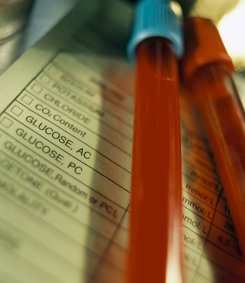
Sepsis, a potentially lethal disease caused by a systemic microbial infection that spreads via the bloodstream, is responsible for more than 200,000 deaths per year in the U.S. alone. Existing treatments can be ineffective but researchers in the Vascular Biology Program at Children's Hospital Boston have come up with a novel first line of defense - the use of magnetism to quickly remove pathogens from the blood. The new blood-cleansing device, developed by Chong Wing Yung and Don Ingber is described in the journal Lab on a Chip.

The system works by drawing the patient's blood and adding tiny magnetic beads (coated with antibodies) to it. The blood and bead mix is then run through a microfluidic system in which two liquid flow streams run side by side without mixing - one containing blood, the other a saline-based collection fluid. The beads bind to the pathogens and a magnet then pulls them (along with the pathogens) into the collection fluid, which is ultimately discarded, while the cleansed blood in reintroduced into the patient.

Tested with contaminated human blood, a device with four parallel collection modules achieved an impressive 80 percent clearance of the fungi Candida albicans in a single pass, at a flow rate and separation efficiency that would be viable for clinical applications. The researchers estimate that a scaled-up system with hundreds of channels could cleanse the blood of an infant within several hours.

"This blood-cleansing microdevice offers a potentially new weapon to fight pathogens in septic infants and adults, that works simply by removing the source of the infection and thereby enhancing the patient's response to existing antibiotics," noted Ingber, who says the next phase will be to test the device in animals.

Related:
New antibiotics solve resistance problem
Radical Nano-Vaccines Show Promise
Bacterial Swimming Style Goes Against The Flow


Source: Children's Hospital Boston


Social

Follow Science a GoGo


Home         All The News      Science Forum         Books, Books, Books         Curiosity Shop         About

The terms and conditions governing your use of this website.
Copyright © 1997 - 2012 Science a Go Go and its licensors. All rights reserved.