Home   |   News    |   Discussions   |   Books   |   Curiosities
Search
Custom Search
Popular Reads

Earthquakes and animal behavior
LHC may produce time travelling particles
Country boys boast bigger junk
Running the numbers on alien life
Uh-oh, placebo
Forgetful? Blame your house
Pill to blame for rise in prostate cancer?
Cat parasite has global ambitions
Carbon monoxide keeps city dwellers happy
Magnetic field alters moral judgments
Stars manufacturing organic matter?
Unnatural selection: Courtesy of The Pill
Men 2% funnier than women
Parasite rewires sexual attraction
Novel psychiatric drugs take aim at gut bacteria
Discussions
General Science

Not-Quite Science

Physics

Climate Change

Science Fiction

Past Forums

Sponsored Links
Browse

Animal Kingdom

Biology

Climate Change

Environment

Evolution

Genetics

Humans

Mind & Brain

Prehistory

Health & Diet

Health Threats

Health & Environment

Health: From The Lab

Mental Health

Reproductive Health

Energy Alternatives

Chemistry

Computing & Electronics

Nanotechnology

Pimping Nature

Robotics & AI

Physics

Space


Curiosities
Sci Shop
Peculiar and bizarre scientific stuff that you didn't even know existed and you don't need.
Books
Book Reviews
Rusty Rockets lists his all-time favorite science titles.
Archives
2012 2011 2010
2009 2008 2007
2006 2005 2004
2003 2002 2001
2000 1999 1998
Feature Archive


7 January 2009
Surprising finding from calorie-weight study
by Kate Melville

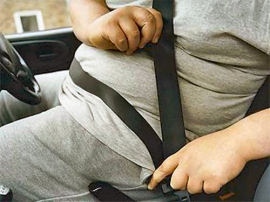
An international study has failed to find supporting evidence for the common belief that the number of calories burned in physical activity is a key factor in rising rates of obesity. Researchers from Loyola University Health System and other research centers compared African-American women in metropolitan Chicago with women in rural Nigeria. On average, the Chicago women weighed 184 pounds and the Nigerian women weighed 127 pounds.

The researchers had expected to find that the slimmer Nigerian women would be more physically active, but to their surprise they found no significant difference between the two groups in the amount of calories burned during physical activity. "Decreased physical activity may not be the primary driver of the obesity epidemic," remarked Loyola nutritionist Amy Luke.

Physical activity strengthens bones and muscles, improves mental health and mood, lowers blood pressure, improves cholesterol levels and reduces the risk of cardiovascular disease, diabetes, breast cancer and colon cancer. But the new research, appearing in the journal Obesity, suggests that weight control might not be among the main benefits.

People burn more calories when they exercise. But they compensate by eating more, said Loyola's Richard Cooper. "We would love to say that physical activity has a positive effect on weight control, but that does not appear to be the case," he added.

Results of the new study are similar to those of a 2007 study of men and women in Jamaica. Researchers from Loyola and other centers found there was no association between weight gain and calories burned during physical activity. "Evidence is beginning to accumulate that dietary intake may be more important than energy expenditure level," Luke said. "Weight loss is not likely to happen without dietary restraint."

Related:
Work smarter, eat harder
Brain Has Sixth Sense For Calories
9 Out Of 10 Americans Obese Or Overweight By 2030
Source: Loyola University Health System


Social

Follow Science a GoGo


Home         All The News      Science Forum         Books, Books, Books         Curiosity Shop         About

The terms and conditions governing your use of this website.
Copyright © 1997 - 2012 Science a Go Go and its licensors. All rights reserved.