Home   |   News   |   Discussion Forum   |   Books   |   Curiosity Shop
Discussion Forum
Recent Posts
Philosophy of religion: Yours, MIne and Ours...
Tutor Turtle
11:17 AM
FOR SALE Sony VAIO PCG-GRT100P (PCG-GRT100P44) PC
mack
09:39 AM
Aether Wave Theory
Zephir
02:40 AM
BioFuel Crops are a Crime
Rallem
02:14 PM
I see now
samwik
09/05/08 12:23 PM
simulation vs. empirical
Anonymous
09/01/08 09:01 AM
Standard Particle Model
Aaron
09/01/08 07:08 AM
What Would We Choose To Do If...
Revlgking
08/31/08 01:59 PM
Energy from Aether : toroidal coils powred with AC
Zephir
08/30/08 06:53 PM
Ice cream headache?
Rallem
08/29/08 02:55 PM
Hot Topics

The Environment

Evolution

Space

Mind/Brain

Electronics

Climate Change


Search
Custom Search
Sponsored Links
Most Read
Hormones gone wild
Homo superior
The universe as magic roundabout
In space, no one can hear you say "doh!"
Bow to your insect overlords!
Bionics
Sex and the schizoid factor
Delusions and mental illness
We come in peace – not!
Eeew!
Small penis syndrome a big problem?
Have you hugged your robot today?
Down on the farm - yields, nutrients and soil quality
Cat parasite has global ambitions
Pop goes the planet
The disappearing male
Missing link a tripping chimp?
Inorganic dust formations alive?
Science Shopping
Sci Shop
Peculiar scientific stuff that you didn't even know existed and you don't need.
News And Research

Physics

Climate Change

Space

Natural World

Health

Technology


All 2008 News

Rusty's Reading List
Sci Books
Join Rusty Rockets for the lowdown on what you should be reading.
Archives
2008 2007
2006 2005 2004
2003 2002 2001
2000 1999 1998
Discussions
Features


4 April 2008
Animals "Stuck In Time"
by Kate Melville

University of Western Ontario researchers investigating how animals perceive time have found that episodic-like memory in rats is qualitatively different from human episodic memory.

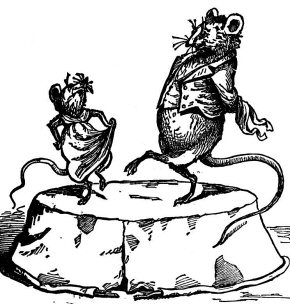
Reporting their findings in Science, William Roberts and his colleagues in Western's Psychology Department found that rats are able to keep track of how much time has passed since they discovered a piece of cheese, be it a little or a lot, but they don't actually form memories of when the discovery occurred. That is, the rats can't place the memories in time.

Roberts designed an experiment in which rats visited the "arms" of a maze at different times of day. Some arms contained moderately desirable food pellets, and one arm contained a highly desirable piece of cheese. Rats were later returned to the maze with the cheese removed on certain trials and with the cheese replaced with a pellet on others. All told, three groups of rats were tested in the research using three varying cues: when, how long ago or when plus how long ago. Only the cue of how long ago food was encountered was used successfully by the rats.

Roberts says this suggests that episodic-like memory in rats is qualitatively different from human episodic memory, which involves retention of the point in past time when an event occurred. "The rats remember whether they did something, such as hoarded food a few hours or five days ago," explained Roberts. "The more time that has passed, the weaker the memory may be. Rats may learn to follow different courses of action using weak and strong memory traces as cues, thus responding differently depending on how long ago an event occurred. However, they do not remember that the event occurred at a specific point in past time."

Previous studies have suggested that rats and scrub jays appear to remember storing or discovering various foods, but it hasn't been clear whether the animals were remembering exactly when these events happened or how much time had elapsed. "This research," said Roberts, "supports the theory that animals are stuck in time, with no sense of time extending into the past or future."

Related:
We Can Forget It For You Wholesale
Does Time Exist?
Yes, We Do Live In The Past

Source: University of Western Ontario


Home   |   News   |   Discussion Forum   |   Books   |   Curiosity Shop   |   About
The terms and conditions governing your use of this website.
Copyright © 1997 - 2008 Science a Go Go and its licensors. All rights reserved.