
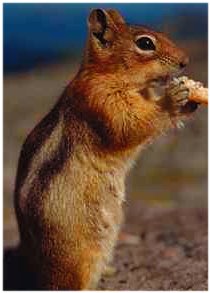
Animal behaviorists have observed California ground squirrels and rock squirrels chewing up rattlesnake skin and smearing it on their fur to mask their scent from predators.
Reporting their observations in the journal Animal Behavior, the researchers noted that adult female squirrels and juveniles apply snake scent more often than adult males, which are less vulnerable to predation by snakes. “The scent probably helps to mask the squirrel’s own scent, especially when the animals are asleep in their burrows at night, or to persuade a snake that another snake is in the burrow,” said researcher Barbara Clucas, from the University of California – Davis.
The squirrels are not limited to the use of shed snake skins, added co-researcher Donald Owings. “They also pick up snake odor from soil and other surfaces on which snakes have been resting, and use that to apply scent. Other rodents have been observed using similar behavior,” he explained.
Related:
Global Warming Causes Genetic Changes
Basic Instinct Not So Basic After All
Source: University of California – Davis
Related posts:
 Fences causing “ecological meltdown,” claims new study
 Return of wolves triggers renaissance in Yellowstone ecosystem
 Finally! Something that eats jellyfish
 Romantic rejection triggers reward and addiction centers in the brain
 Predator-prey relationships a key driver in nature’s synchronicity
 Pregnant Moose Cozy Up To Traffic




Comments are closed.