
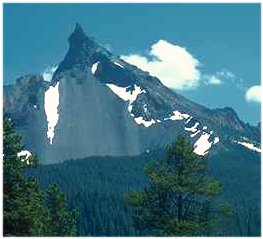
Roads and motor vehicles aren’t generally thought of as beneficial to forest critters. But when it’s time for moose to give birth in the Greater Yellowstone Ecosystem, they head to where it is safest from predators – namely closer to people. At least, that’s according to a new study by the Wildlife Conservation Society.
Published in the Society’s journal Biology Letters, the study found that moose avoid grizzly bear predation of their calves by moving closer to roads and other infrastructure prior to giving birth. Society researchers tracked both moose and bears, finding that pregnant moose in Greater Yellowstone have shifted their movements each year for the past decade about 125 meters closer to roads during calving season.
Other species that use humans as cover from predation include vervet monkeys in Kenya and axis deer in Nepal that avoid big cats by staying close to ranger stations. “The study’s results indicate that moose and other prey species find humans more benign and hence move to humans for safety whereas predators do not because we humans tend to be less kind to predators,” Berger noted.
Related articles:
Of Pendulums And Predation
Concrete Jungle A Blooming Miracle For Plants
Urban Areas Turn Migratory Birds Into Couch Potatoes
Source: Wildlife Conservation Society
Related posts:
 Fences causing “ecological meltdown,” claims new study
 Camouflage or bright colors? What’s better to live long and prosper?
 Return of wolves triggers renaissance in Yellowstone ecosystem
 Nutrients from animal carcasses a missing piece of biodiversity jigsaw
 Predator-prey relationships a key driver in nature’s synchronicity
 Squirrels Use Snake Eau de Cologne








Comments are closed.