Home   |   News    |   Discussions   |   Books   |   Curiosities
Search
Custom Search
Popular Reads

Earthquakes and animal behavior
LHC may produce time travelling particles
Country boys boast bigger junk
Running the numbers on alien life
Uh-oh, placebo
Forgetful? Blame your house
Pill to blame for rise in prostate cancer?
Cat parasite has global ambitions
Carbon monoxide keeps city dwellers happy
Magnetic field alters moral judgments
Stars manufacturing organic matter?
Unnatural selection: Courtesy of The Pill
Men 2% funnier than women
Parasite rewires sexual attraction
Novel psychiatric drugs take aim at gut bacteria
Discussions
General Science

Not-Quite Science

Physics

Climate Change

Science Fiction

Past Forums

Sponsored Links
Browse

Animal Kingdom

Biology

Climate Change

Environment

Evolution

Genetics

Humans

Mind & Brain

Prehistory

Health & Diet

Health Threats

Health & Environment

Health: From The Lab

Mental Health

Reproductive Health

Energy Alternatives

Chemistry

Computing & Electronics

Nanotechnology

Pimping Nature

Robotics & AI

Physics

Space


Curiosities
Sci Shop
Peculiar and bizarre scientific stuff that you didn't even know existed and you don't need.
Books
Book Reviews
Rusty Rockets lists his all-time favorite science titles.
Archives
2012 2011 2010
2009 2008 2007
2006 2005 2004
2003 2002 2001
2000 1999 1998
Feature Archive


9 October 2007
GE Corn A Threat To Waterways?
by Kate Melville

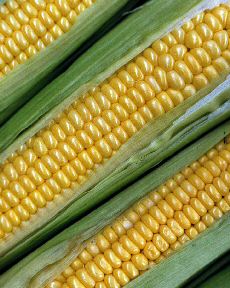
A widely planted variety of genetically engineered corn has the potential to harm aquatic ecosystems, suggests a study published in the Proceedings of the National Academies of Sciences. The study was conducted by Indiana University (IU) environmental scientists who established that pollen and other plant parts containing toxins from genetically engineered Bt corn are washing into streams.

IU's Todd Royer found that Bt corn byproducts increased mortality and reduced growth in caddisflies - aquatic insects that are related to the pests targeted by the toxin in Bt corn. "Caddisflies," Royer noted, "are a food resource for higher organisms like fish and amphibians. And, if our goal is to have healthy, functioning ecosystems, we need to protect all the parts. Water resources are something we depend on greatly."

Bt corn is engineered to include a gene from the micro-organism Bacillus thuringiensis, which produces a toxin that protects the crop from pests. It was licensed for use in 1996 and quickly gained popularity. In 2006, around 35 percent of corn acreage planted in the U.S. was genetically modified.

Before licensing Bt corn, the EPA conducted trials to test its impact on water biota. But it used Daphnia, a crustacean commonly used for toxicity tests, and not insects that are more closely related to the target pests, the study noted.

"Every new technology comes with some benefits and some risks," Royer said. "I think probably the risks associated with widespread planting of Bt corn were not fully assessed." He added that there was considerable variation in the amount of byproducts found at study locations. And there is likely also to be significant geographical variation; farmers in Iowa and Illinois, for example, are planting more Bt corn than those in Indiana.

Related articles:
Woody Girth, Not Length, Makes For Healthy Streams
Gloomy Prognosis For Amphibians
Prozac In Wastewater Threatens Mussels
POP Goes The Planet

Source: Indiana University


Social

Follow Science a GoGo


Home         All The News      Science Forum         Books, Books, Books         Curiosity Shop         About

The terms and conditions governing your use of this website.
Copyright © 1997 - 2012 Science a Go Go and its licensors. All rights reserved.