Home   |   News   |   Discussion Forum   |   Books   |   Curiosity Shop
Discussion Forum
Recent Posts
100,000 Gorillas Discovered
Rallem
Semantics, Etymology, Syntactics, Etc.
Zephir
04:32 AM
NASA Tastes Martian Water
Mike Kremer
05:07 PM
Philosophy of religion: Yours, MIne and Ours...
Revlgking
09:29 AM
Your view please: solar torrefaction of biomass
Louise
08/06/08 04:31 AM
About the philosophy of the negation of the axiom
Zephir
08/06/08 03:10 AM
Vitamin C Jabs Fight Cancer
Mike Kremer
08/05/08 07:58 PM
Philosophy of Religions--all religions, including,
Revlgking
08/05/08 05:59 PM
Worlds Oldest Calculator
Rallem
08/05/08 02:37 PM
Aether Wave Theory
Zephir
08/05/08 11:23 AM
Hot Topics

The Environment

Evolution

Space

Mind/Brain

Electronics

Climate Change


Search
Custom Search
Sponsored Links
Most Read
Hormones Gone Wild
Homo Superior
The Universe As Magic Roundabout
In Space, No One Can Hear You Say "Doh!"
Bow To Your Insect Overlords!
Bionics
Sex And The Schizoid Factor
Delusions And Mental Illness
We Come In Peace – NOT!
Eeew!
Small Penis Syndrome A Big Problem?
Have You Hugged Your Robot Today?
Down On The Farm - Yields, Nutrients And Soil Quality
Cat Parasite Has Global Ambitions
POP Goes The Planet
The Disappearing Male
Missing Link A Tripping Chimp?
Inorganic Dust Formations Alive?
Science Shopping
Sci Shop
Peculiar scientific stuff that you didn't even know existed and you don't need.
News And Research

Physics

Climate Change

Space

Natural World

Health

Technology


All 2008 News

Rusty's Reading List
Sci Books
Join Rusty Rockets for the lowdown on what you should be reading.
Archives
2008 2007
2006 2005 2004
2003 2002 2001
2000 1999 1998
Discussions
Features


4 October 2007
Taking The Heat Off Inefficient Engines
by Kate Melville

An incredible 60 percent of the energy that goes into an automotive combustion cycle is lost, primarily to waste heat through the exhaust and radiator system. It's no surprise then that physicists are looking at how to harness this wasted thermal energy and convert it into electricity via thermoelectric devices.

Speaking at the NanoTX '07 conference, Clemson University physicist Terry Tritt told attendees that even at the current efficiencies of thermoelectric devices (7 to 8 percent), more than 1.5 billion gallons of diesel could be saved each year in the U.S. if thermoelectric generators were used on the exhausts of heavy trucks.

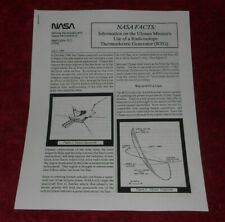
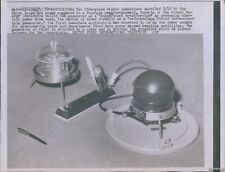
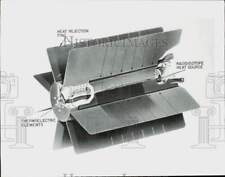
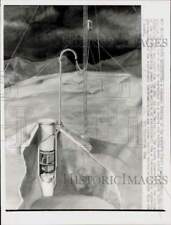
"Thermoelectric generators are currently used in NASA's deep-space probes to convert the heat of radioactive elements to electrical energy, powering these systems for over 30 years," Tritt said. "Thermoelectric energy conversion is a solid-state technology that is environmentally friendly. One of the more promising 'down-to-earth' applications lies in waste-heat recovery in cars."

Tritt said that researchers at Clemson were focusing on developing higher-efficiency thermoelectric materials that could increase savings significantly. This research on the electrical and thermal properties of new materials could reduce the world's reliance on fossil fuels and has shown promise with two classes of materials: low-dimensional systems for enhanced electrical properties and increased phonon scattering that leads to inherently low thermal conductivity.

Tritt heads up the Department of Energy's Center of Excellence in Thermoelectric Materials Research at Clemson. The center focuses on the next generation of thermoelectric materials for power conversion and refrigeration. Researchers in physics, materials science and chemistry screen promising new classes of materials in order to achieve higher-performance thermoelectric materials. DOE recently renewed the program with more than $1 million a year in research funding for the next three years.

Related articles:
Organic Molecules Coaxed Into Thermoelectric Generation
Cost Breakthrough For Inorganic Solar Cells


Source: Clemson University


Home   |   News   |   Discussion Forum   |   Books   |   Curiosity Shop   |   About
The terms and conditions governing your use of this website.
Copyright © 1997 - 2008 Science a Go Go and its licensors. All rights reserved.