
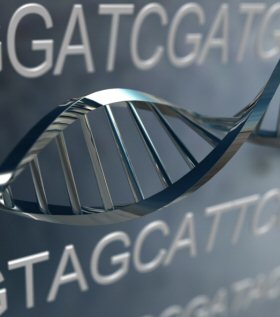
It looks like it may be back to the drawing board for many of the new gene therapy treatments being developed around the world. Professor Alexandre Reymond, from the Centre for Integrative Genomics in Switzerland, told attendees at the annual conference of the European Society of Human Genetics that current gene knock-out and knock-in models may be invalid due to huge gaps in the map of the human genome.
Reymond is part of an international team (known as the ENCODE consortium) working toward identifying all the functional elements in the human genome sequence. The pilot phase is focusing on 44 regions, totaling approximately 1 percent of the human genome. By testing and comparing existing methods for annotating the human genome, the consortium members hope to find the most effective ways of analyzing it in its entirety.
“The notion that mammalian transcriptomes [the set of all messenger RNA molecules produced in a population of cells] are made of a swarming mass of different overlapping transcripts, together with our findings that suggest we have only uncovered a portion of its complexity, has important implications for medicine, explained Reymond. “They increase the size of the genomic regions that might harbor disease-causing mutations, and they could impair cloning strategies that try to find genes implicated in these pathologies.”
Reymond urged that extra caution should be used by medical researchers when associating a genetic phenotype with a gene knock-out or knock-in model (where genes are added or deleted from a model organism in order to study the effect of therapies). “It appears that the same nucleotide [the structural unit of DNA and RNA] on the genome can carry out a number of different, sometimes simultaneous, functions. Our work has shown that the human genome is far more complex than anyone could have imagined, even ten years ago. Understanding these complexities is essential to the development of effective and safe genetic medicine in the future,” he concluded.
Related articles:
DNA Structure Still Surprises
Personality Encoded In Junk DNA
Horizontal Gene Transfer Accelerating Evolution
Junk RNA Begins To Yield Its Secrets
Biochemists Mull Alternative DNA Structures
Source: European Society of Human Genetics
Related posts:
 Male genetic diversity strangled by wealth and power
 Study questions whether lab-grown cells are a faithful model for human disease
 Mug shots from DNA possible, say scientists
 Genetics play no role in disease risk, claims controversial new study
 Gene expression altered with meditation
 Worm DNA preserved in tequila




![With benefits) Limited 10) Nakano Human Genome [Live Commentary] Special Editio picture](/store/img/g/2~EAAOSwN1FmDP4o/s-l225/With-benefits-Limited-10-Nakano-Human-Genome-Live-.jpg)




Comments are closed.