Home   |   News    |   Discussions   |   Books   |   Curiosities
Search
Custom Search
Popular Reads

Earthquakes and animal behavior
LHC may produce time travelling particles
Country boys boast bigger junk
Running the numbers on alien life
Uh-oh, placebo
Forgetful? Blame your house
Pill to blame for rise in prostate cancer?
Cat parasite has global ambitions
Carbon monoxide keeps city dwellers happy
Magnetic field alters moral judgments
Stars manufacturing organic matter?
Unnatural selection: Courtesy of The Pill
Men 2% funnier than women
Parasite rewires sexual attraction
Novel psychiatric drugs take aim at gut bacteria
Discussions
General Science

Not-Quite Science

Physics

Climate Change

Science Fiction

Past Forums

Sponsored Links
Browse

Animal Kingdom

Biology

Climate Change

Environment

Evolution

Genetics

Humans

Mind & Brain

Prehistory

Health & Diet

Health Threats

Health & Environment

Health: From The Lab

Mental Health

Reproductive Health

Energy Alternatives

Chemistry

Computing & Electronics

Nanotechnology

Pimping Nature

Robotics & AI

Physics

Space


Curiosities
Sci Shop
Peculiar and bizarre scientific stuff that you didn't even know existed and you don't need.
Books
Book Reviews
Rusty Rockets lists his all-time favorite science titles.
Archives
2012 2011 2010
2009 2008 2007
2006 2005 2004
2003 2002 2001
2000 1999 1998
Feature Archive


30 April 2007
Plant-Methane Brouhaha Put To Bed
by Kate Melville

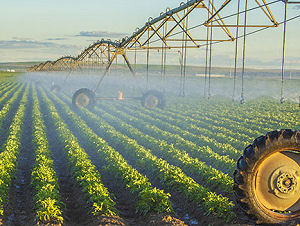
The suggestion that plants may be a prodigious source of the greenhouse gas methane has finally been put to the sword by Dutch scientists. Reporting in New Phytologist, Tom Dueck and co-researchers concluded that methane emissions from plants are negligible and do not contribute to global climate change.

The researchers executed a novel experiment that used plants grown in a facility containing atmospheric carbon dioxide with a heavy form of carbon (13C). The heavy carbon makes any carbon released from the plants relatively easy to detect.

Thus, if plants are able to emit methane, it will contain the heavy carbon isotope and can be detected against the background of lighter carbon molecules in the air.

Saturating the plants with heavy carbon. 13C-Methane emission was measured under controlled, but natural conditions with a photo-acoustic laser technique. This technique is so sensitive that the scientists are able to measure the carbon dioxide in the breath of small insects like ants.

The researchers found that the measured emission rates were so close to the detection limit that they did not statistically differ from zero. Conscious of the fact that a small amount of plant material might only result in small amounts of methane, the researchers sampled the "heavy" methane in the air in which a large amount of plants were growing. Again, the measured methane emissions were negligible.

While Dueck concluded that there is no reason to reassess the mitigation potential of plants, he did stress that questions still remain about the gap in the global methane equation.

Related articles:
Researchers Slam Media Over Wrong-Headed Plant-Methane Hype
Laughing Gas Levels From Biodiesel Crops Not Funny
Source: New Phytologist


Social

Follow Science a GoGo


Home         All The News      Science Forum         Books, Books, Books         Curiosity Shop         About

The terms and conditions governing your use of this website.
Copyright © 1997 - 2012 Science a Go Go and its licensors. All rights reserved.