
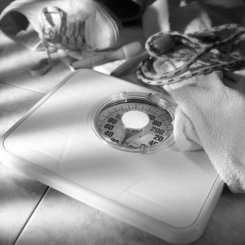
Body fat doesn’t just, er, make you fat. It also acts as a repository for all sorts of potentially nasty substances; like PCBs and other environmental pollutants. That’s why rapidly shedding those extra pounds isn’t always a good idea, as a whole slew of chemicals can be released back into the body, potentially overwhelming the body’s ability to deal with them.
While fat does a good job of sequestering away junk from the environment, it appears that it may do evenmore important work in keeping the body’s ownchemical cocktail in balance. Researchers at the University of California, Irvine (UCI), have found that fat droplets – tiny balls of fat that exist in most cells – appear to regulate excess proteins in the body. Excess and misshapen proteins are the culprits in Mad Cow Disease and are believed to be behind a number of other diseases.
Gross and his team used fruit flies in their experiments because of strong similarities between the fat droplets in the flies and in mammals. Using mass spectrometry to examine the droplets, they were surprised to find histones (a protein that is used by the cell to fold DNA within the nucleus) present. Even though histones appear to serve no purpose outside the nucleus, the scientists found that 50 percent of all the histones present in the cell were in the fat droplets. Intriguingly, the amount of histones in the droplets dropped as the embryo moved from early development to later stages, indicating that the histones moved from the droplets to the nucleus as they were needed. The researchers speculate that the fat droplets act as a “warehouse” where the proteins are stored until needed by the nucleus of the cell.
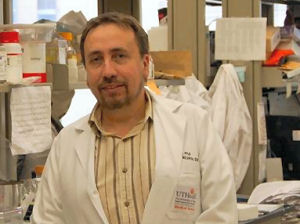
Gross hypothesizes that the fat droplets serve this purpose not just for histones, but for other excess proteins as well. “In prion diseases, such as Mad Cow Disease, for example, proteins in the brain are misshapen,” Gross explained. “They become abnormal, clump together and accumulate on brain tissue. Although we have no evidence yet that fat droplets could help with this, prion diseases are one area in which we can explore further to see if these droplets are helping keep excess bothersome proteins out of the way.”








Comments are closed.