
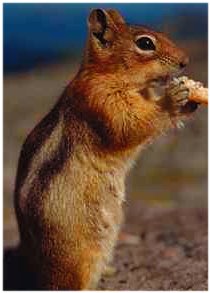
The effects of climate change over the past few decades have led to heritable, genetic changes in animals as diverse as squirrels, birds and mosquitoes, according to biologist William E. Bradshaw, from the University of Oregon. But Bradshaw, writing in Science, argues that these genetic changes are in response to altered seasonal events and not to the expected direct effects of increased summer temperatures.
Bradshaw explains that global warming is proceeding fastest at the most northern latitudes, resulting in longer growing seasons while simultaneously alleviating winter cold stress without imposing summer heat stress. “Over the past 40 years, animal species have been extending their range toward the poles and populations have been migrating, developing or reproducing earlier,” he said. “These expansions and changes have often been attributed to ‘phenotypic plasticity,’ or the ability of individuals to modify their behavior, morphology or physiology in response to altered environmental conditions.”
The researchers say that no studies have found genetic changes in populations relating to the generally expected direct effects of increasing temperature. There are no examples in animal populations of genetic changes that have either increased the upper limits of heat tolerance or increased the optimal temperature for growth, development and reproduction. “Small animals with short life cycles and large population sizes will probably adapt to longer growing seasons and be able to persist,” said Bradshaw. “However, populations of many large animals with longer life cycles and smaller population sizes will experience a decline in population size or be replaced by more southern species.”
“Genetic shifts in the timing of seasonal events should precede genetic shifts of thermal optima or increased heat tolerance over evolutionary time,” added Holzapfel. “That is the pattern that is emerging. Questions remain about the relative rates of environmental and evolutionary change. However, it is clear that unless the long-term magnitude of rapid climate change is widely acknowledged and effective steps are taken to mitigate its effects, natural communities that we are familiar with will cease to exist.”











Comments are closed.