
What’s the best way to reduce obesity rates among children? Take their chairs away and make them stand, according to James Levine, a Mayo Clinic obesity researcher. And if this new initiative gets off the ground, children in the classrooms of the future will be schooled at “standing desks” equipped with new technologies.
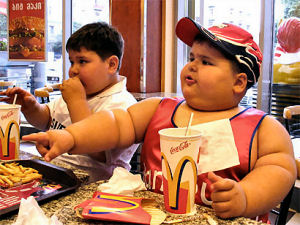
Childhood obesity has reached epidemic levels in the United States. According to the National Centers for Disease Control and Prevention, 15 percent of children are currently overweight. The major causes are lifestyle related, with many children having poor diets and suffering a lack of physical activity at home and school, so Levine thought that a fresh approach might turn future children’s lives around. “Can you imagine a school without desks? A school where children are moving as part of their lessons? And most importantly, they are smiling and healthy?,” asks Levine. The idea for the chairless classroom prompts a straightforward question: do children need to sit at desks to learn?
Levine says he and the organizers are trying to attain the common objective of resolving the “inactivity in children and realize that the future has to look different from our past.” And different it will be, should Levine’s plan succeed. In addition to the “standing” desks, the classroom comes equipped with new technology learning facilities supplied by Apple, such as “Learn ‘n Move” bays, video streamed pod-casting centers, personalized laptops and wireless technology. “Apple is proud to be part of this important study,” enthused John Couch, Apple’s ironically named Vice President of Education, who clearly envisages a rerun of the glory days when every classroom had an Apple II computer. “We are thrilled that our products and solutions can add to this effort and help transform teaching and learning to meet the needs of today’s students.”
Viability tests of the new classroom are currently underway, with thirty 4th and 5th graders having their activity levels monitored in a traditional school environment. The next step is to monitor the activity of students while taking lessons in the classroom of the future. The Mayo team collects the necessary data by using a specially designed telemetry device called a Posture and Activity Detector (PAD) that each child will wear on their leg. “We hope that the novel aspect of the technology will interest them so they choose to stand and move, rather than look for a place to sit,” said researcher Lorraine Lanningham-Foster. “Kids will stand at a video arcade; why not at a computerized learning center?”
Dr. Levine, considers seeing children move around while learning as the biggest reward. “Children are so amazing,” he said. “They are adaptable and actually love to learn, we just have to let them move naturally.” But some questions remain, such as how well students can concentrate on studies while standing. And in regard to beating obesity, just how much of a difference can standing – rather than sitting at a desk – actually make? Standing only burns roughly 15 calories per hour more than sitting (sitting – 85, standing – 100), so the scheme may have only a small impact on obesity.














Comments are closed.