
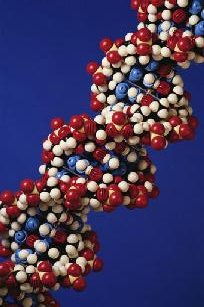
Although a great deal of progress has been made in the self-assembly of nanomaterials, defects that occur during the assembly process present major problems for critical applications such as molecular electronics and photonics. To date, efforts to overcome these assembly errors have focused on either minimizing errors or designing devices that can tolerate errors, but a new procedure developed by researchers at the University of Illinois at Urbana-Champaign may provide a much more elegant solution.
Based on catalytic DNA, the new “proofreading” and error-removal process can find and correct defects in self-assembled nanomaterials, which the researchers say represents “a paradigm shift in nanoscale science and engineering.” Their work appears in the journalAngewandte Chemie.
“Instead of trying to avoid defects or work around them, it makes more sense to accept defects as part of the process and then correct them during and after the assembly process,” said researcher Yi Lu. “This procedure is analogous to how nature deals with defects, and can be applied to the assembly of nanomaterials using biomolecules or biomimetic compounds.”
The system contains three kinds of nanoparticles which are encoded by different DNA. Two are defined as “correct” particles and one is defined as a “wrong” particle. Besides the difference in coding DNA, the nanoparticles can also be different in other aspects, such as size. “To allow the catalytic DNA substrate to be a template for nanoparticle assembly, the substrate strand must be complementary to the DNA attached to the nanoparticles,” Lu explained. “A defect can occur in a DNA-templated gold nanoparticle assembly when the wrong particle is incorporated into the structure.”
When a particle of the correct size is encountered, binding of the longer arm of the enzyme to the DNA template is permitted, while binding of the shorter arm to the DNA template is inhibited. “The active structure of the catalytic DNA cannot form. As a result, the template is not cleaved and the particle is incorporated into the assembly,” Lu said.
When a particle of the wrong size is mistakenly incorporated into the assembly, the enzyme can bind both its arms to the substrate template and form an active structure to cleave the substrate and remove the offending particle.
Lu said the research demonstrated that proofreading and error-correction can take place during and after the assembly of nanoparticles. “This was a small, but definite, step in the right direction. The error-correction procedure can be expanded to include many other biomolecules and biomimetic compounds for controlling the assembly of nanoparticles of defined particle sizes, shapes or compositions,” he said in conclusion.











Comments are closed.