
30 January 1999
Greenhouse Gas Scare
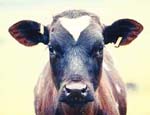 Jared Leadbetter, Ph.D., a University of Iowa postdoctoral associate of microbiology, has built upon earlier studies that found wood-feeding termites digest their fiber-rich food in a highly productive manner and, consequently, emit less methane into the atmosphere than expected. Methane is a potent greenhouse gas and a major contributor to global warming, according to the U.S. Environmental Protection Agency (EPA). In comparison to termites, cattle, which also have a diet rich in fiber, are less efficient. As much as 20 percent of the energy contained in the grass that cows chew is later emitted into the atmosphere as methane.
Scientists do not understand which factors lead to these two very different outcomes. Learning more about termites could lead to improvements in cattle nutrition and decreases in their methane emissions, Leadbetter said.
As a contributor to global warming, methane is second only to carbon dioxide, according to the EPA. Over the last 200 years, methane concentrations have more than doubled, largely due to human-related activities. Livestock are among the largest sources of methane from human-related activities. The roughly 100 million cattle in the United States produce about six million metric tons of methane into the atmosphere annually, the EPA found.
In the article that appears in Science, Leadbetter and his colleagues investigated bacteria known as spirochetes that are found in termites' guts.
Leadbetter and his colleagues conducted the research at Michigan State University, where Leadbetter pursued his doctoral and post doctoral studies. Leadbetter came to the UI in June 1998.
The scientists found that these spirochetes consume hydrogen, a key intermediate produced during the digestion of plant fiber.The spirochetes nourish the termites by converting the hydrogen into acetate -- an excellent food source for both termites and cows. In cows, the spirochetes apparently are absent or unable to convert the hydrogen into acetate because such hydrogen is converted into methane.
"Comparing them mouthful to mouthful, the termite is more efficient than the cow," Leadbetter said. "These spirochetes help to explain this. By conducting basic science we have learned things about the termite that may have productive applications down the road.'